How Much Is My Nashville Home Worth? A Complete Guide to Home Values in Middle Tennessee (2026)

How Much Is My Nashville Home Worth?
If you're thinking about selling your home in Middle Tennessee, one of the first questions you'll likely ask is:
"How much is my home actually worth?"
It's an important question, but it's also one of the most misunderstood.
Many homeowners immediately turn to online home value estimates. While these tools can provide a rough starting point, they often miss the details that can dramatically impact a property's market value. A home with the same square footage as your neighbor's may sell for tens—or even hundreds—of thousands of dollars more because of its location, condition, updates, privacy, view, lot size, or marketing strategy.
In today's market, pricing your home correctly isn't just about looking at recent sales. It's about understanding buyer demand, current inventory, neighborhood trends, financing conditions, and how your property compares to the competition.
Whether you own a luxury estate in Belle Meade, a lakefront property on Old Hickory Lake, a family home in Hendersonville, an executive home in Brentwood, acreage in College Grove, or a starter home in Gallatin, your property's value is unique.
Home Value Isn't Just About Square Footage
One of the biggest misconceptions homeowners have is that their home's value is based primarily on its size.
Square footage certainly matters, but it's only one piece of a much larger picture.
Professional REALTORS evaluate dozens of variables before recommending a listing price, including:
- Recent comparable sales
- Pending contracts
- Current competition
- Neighborhood demand
- Interest rates
- Lot characteristics
- Privacy
- School zones
- Renovations
- Age of major systems
- Floor plan
- Natural light
- Outdoor living spaces
- Garage configuration
- Basement finish
- Energy efficiency
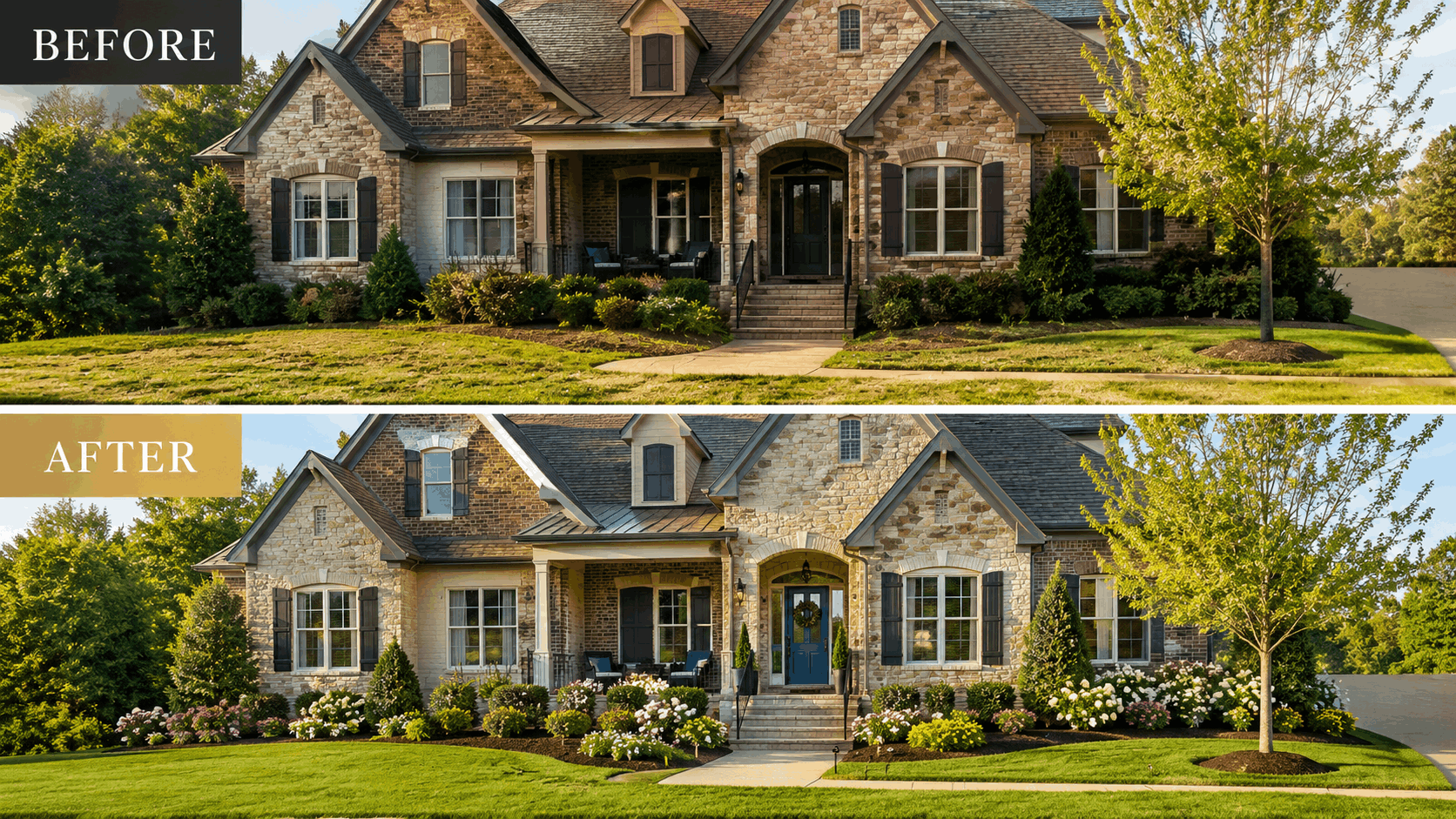
- Curb appeal
- Overall presentation
Two homes with identical square footage can produce dramatically different sales prices simply because one offers a more desirable layout, better updates, or a superior location.
The market ultimately determines value—not a formula.
Why Online Home Estimates Are Often Wrong
Websites offering instant home valuations have become increasingly popular, but it's important to understand what these estimates actually represent.
Most online valuation tools use Automated Valuation Models (AVMs). These systems rely heavily on publicly available information such as tax records, previous sales, and mathematical algorithms.
While convenient, they typically don't account for many of the factors buyers notice immediately during a showing.
For example, an automated system may not recognize:
- A fully remodeled kitchen
- A new luxury primary bathroom
- Fresh interior paint
- New hardwood flooring
- Custom trim work
- Smart home technology
- A professionally finished basement
- Mature landscaping
- Outdoor entertaining areas
- Exceptional views
- Privacy from neighboring homes
- A premium lot within the neighborhood
Likewise, these systems rarely know if a property backs up to a busy road, has deferred maintenance, or suffers from functional layout issues that can reduce buyer interest.
This is why two homes that appear similar online can receive very different offers once they hit the market.
The Three Numbers That Matter
When determining a home's value, experienced REALTORS focus on three categories of market data.
1. Sold Properties
Recently closed sales provide the strongest indication of what buyers have actually been willing to pay.
These properties establish the foundation for determining market value.
However, even sold homes require adjustments based on differences in condition, upgrades, lot size, and location.
2. Pending Sales
Pending properties offer insight into current buyer demand.
Although final prices aren't yet public, pending homes reveal what buyers are willing to purchase today—not several months ago.
In a rapidly changing market, pending sales often provide better guidance than older closed transactions.
3. Active Competition
Perhaps the most overlooked factor is your current competition.
Buyers don't compare your home to properties that sold six months ago.
They compare it to the homes available this weekend.
If several comparable homes are currently listed nearby, pricing becomes even more critical.
Your home must stand out not only in condition and presentation but also in perceived value.
Zillow Estimate vs. Professional Home Valuation

Many homeowners begin their research by checking their home's Zestimate or another online valuation tool. While these estimates can provide a general starting point, they should not be considered a substitute for a professional home valuation.
A Zestimate is generated using automated algorithms and publicly available data, including tax records, previous sales, square footage, and neighborhood trends. While this information can be useful, it doesn't account for many of the details buyers notice immediately when touring a home.
For example, a Zestimate doesn't know if you've recently remodeled your kitchen, updated your bathrooms, installed new flooring, replaced the roof, added a screened porch, or professionally landscaped your yard. It also can't accurately measure factors such as privacy, views, lot appeal, natural light, floor plan, or the overall presentation of your home.
A professional Comparative Market Analysis (CMA), on the other hand, is prepared by an experienced REALTOR® who evaluates your property in person and compares it to recently sold homes, pending sales, active competition, neighborhood trends, buyer demand, and current market conditions.
While online estimates can be a helpful starting point, a CMA provides a more accurate picture of what buyers may realistically be willing to pay in today's Middle Tennessee market.
The goal isn't simply to estimate your home's value—it's to develop a pricing strategy that helps you attract qualified buyers and maximize your final sales price.
What Actually Determines Home Value?
Professional REALTORS evaluate each property individually.
Some of the most influential factors include:
Location
The old saying remains true.
Location continues to be one of the strongest drivers of real estate value.
Neighborhood desirability, school districts, commute times, shopping, parks, restaurants, and future development all influence buyer demand.
Even within the same subdivision, homes on quiet cul-de-sacs may command a premium over properties backing to busy roads.
Condition
Well-maintained homes consistently attract more interest.
Buyers notice details such as:
- Fresh paint
- Clean landscaping
- Updated flooring
- Modern lighting
- Roof condition
- HVAC age
- Window quality
- Kitchen updates
- Bathroom renovations
Deferred maintenance can reduce perceived value even when repairs are relatively inexpensive.
Lot Characteristics
The land itself often contributes significantly to value.
Features that frequently command premium pricing include:
- Larger lots
- Mature trees
- Privacy
- Level backyards
- Cul-de-sac locations
- Golf course frontage
- Lake frontage
- Water views
- Acreage
- Mountain or hillside views
In Middle Tennessee, privacy has become one of the most requested features among today's buyers.
Floor Plan
Buyers aren't simply purchasing square footage—they're purchasing functionality.
Open-concept living, dedicated home offices, main-level primary suites, bonus rooms, flex spaces, and seamless indoor-outdoor living often outperform outdated layouts, even when total square footage is similar.
Renovations
Not every renovation increases value equally.
Strategic improvements—such as updated kitchens, refreshed bathrooms, modern lighting, and quality flooring—often provide stronger returns than highly personalized or luxury upgrades that appeal to a narrower audience.
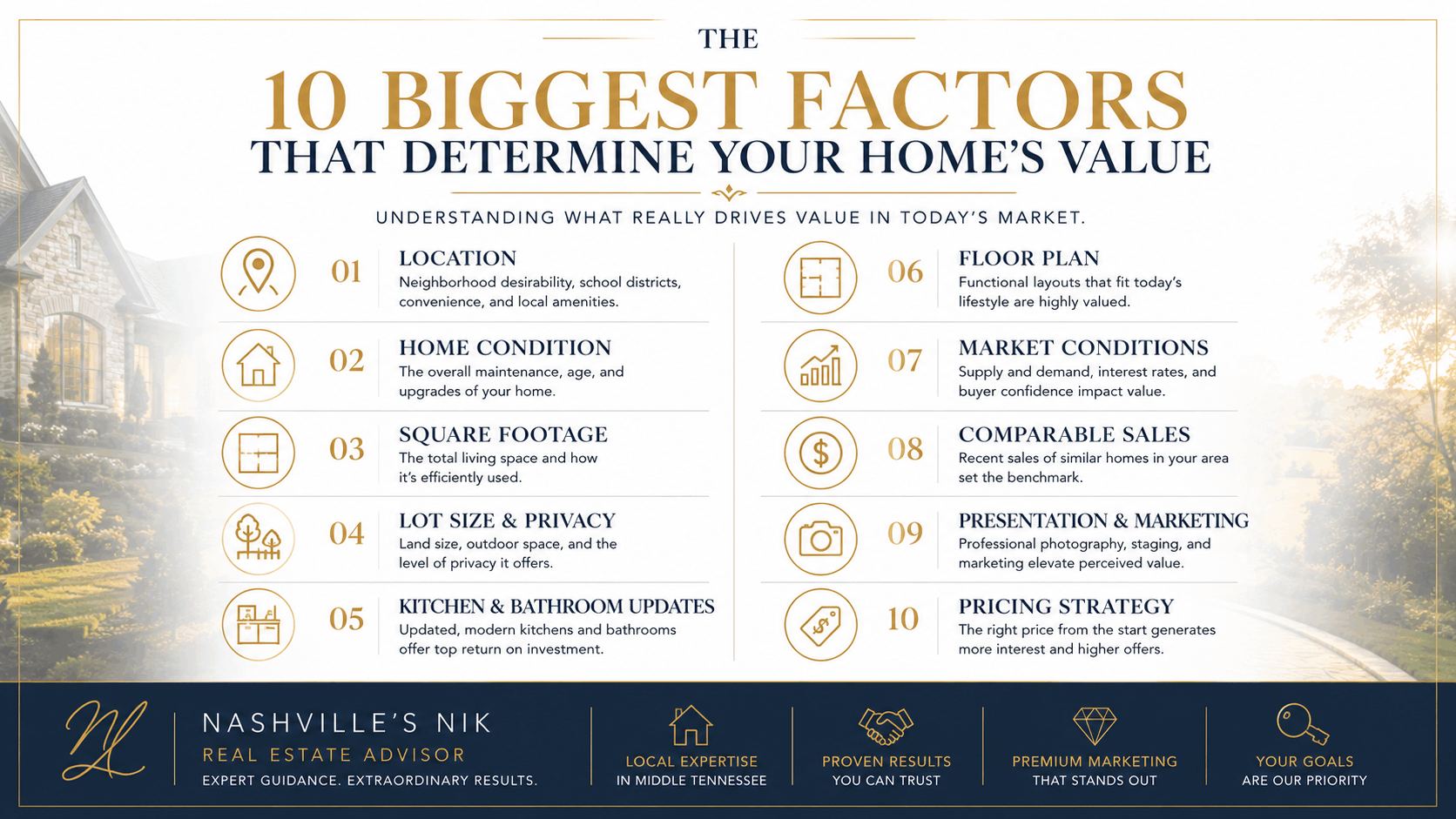
The 10 Biggest Factors That Determine Your Home's Value
No two homes are exactly alike, but nearly every home valuation comes down to these ten key factors. Understanding what buyers and real estate professionals evaluate can help you maximize your home's value before listing.
1. Location
Neighborhood desirability, schools, commute times, nearby shopping, parks, and community amenities all play a major role in determining value.
2. Home Condition
Well-maintained homes typically command stronger offers. Buyers notice cleanliness, maintenance, and whether a home feels move-in ready.
3. Square Footage
Size matters, but buyers compare your home's living space to similar properties currently on the market—not just the total square footage.
4. Lot Size & Privacy
Large lots, mature trees, cul-de-sacs, lake frontage, and private settings often increase buyer demand throughout Middle Tennessee.
5. Kitchen & Bathroom Updates
Modern kitchens and updated bathrooms remain two of the biggest factors influencing a buyer's purchasing decision.
6. Floor Plan & Functionality
Open-concept layouts, home offices, bonus rooms, and main-level primary suites continue to be among the most requested features.
7. Market Conditions
Inventory levels, interest rates, and buyer demand directly affect how much buyers are willing to pay at any given time.
8. Comparable Sales
Recent sales of similar homes provide one of the strongest indicators of current market value.
9. Presentation & Marketing
Professional photography, staging, video, drone imagery, and strategic marketing can significantly influence buyer perception and showing activity.
10. Pricing Strategy
Pricing your home correctly from the beginning often attracts more qualified buyers, generates stronger offers, and helps maximize your final sales price.
Why Two Nearly Identical Homes Can Sell for Very Different Prices
One of the biggest surprises for homeowners is discovering that two homes with similar square footage in the same neighborhood can sell for dramatically different prices.
At first glance, this doesn't seem to make sense. After all, if the homes are similar in size and age, shouldn't they be worth about the same amount?
Not necessarily.
Today's buyers evaluate far more than the number of bedrooms and bathrooms. They compare every aspect of a home's presentation, condition, location, and perceived value before deciding what they're willing to pay.
For example, imagine two homes located in the same subdivision in Brentwood. Both offer approximately 3,500 square feet and were built within a year of each other. One sells for $1.2 million, while the other receives multiple offers and closes at $1.35 million.
What made the difference?
The higher-selling home may have featured a renovated kitchen with quartz countertops, updated lighting, hardwood flooring throughout, professionally landscaped outdoor living areas, and magazine-quality photography. It may also have been professionally staged and priced strategically to create urgency among buyers.
Meanwhile, the other home may have had outdated finishes, dark rooms, deferred maintenance, or poor marketing that limited buyer interest.
Buyers don't simply purchase square footage. They purchase a lifestyle, an emotional connection, and confidence that the home has been well cared for.
The Psychology Behind Home Pricing
Pricing a home is both a science and an art.
Data provides the foundation, but understanding buyer behavior is equally important.
Many homeowners believe pricing their home higher leaves room for negotiation. While that may sound logical, it often produces the opposite result.
Today's buyers have access to more information than ever before. They monitor new listings daily, compare homes online, and often tour several properties before making an offer. If a home appears overpriced compared to similar listings, many buyers won't even schedule a showing.
Instead of generating excitement, an inflated price can cause a property to sit on the market longer than expected.
As days on market increase, buyers begin asking questions:
- "Why hasn't this home sold?"
- "Is something wrong with it?"
- "Will the seller eventually reduce the price?"
Once a property becomes stale, sellers frequently find themselves making price reductions that could have been avoided with a stronger initial pricing strategy.
The strongest offers often occur during the first two weeks a home is on the market, when buyer interest is at its highest.
The Importance of First Impressions
Buyers form opinions quickly.
In many cases, they begin evaluating your home before they ever step inside.
Professional photography, drone images, video tours, compelling property descriptions, and exceptional curb appeal all influence whether buyers decide to schedule a showing.
Once they arrive, every detail matters.
Clean windows, fresh landscaping, neutral paint colors, uncluttered living spaces, and abundant natural light all contribute to a positive first impression.
Small details can have a surprisingly large impact on perceived value.
Replacing outdated light fixtures, touching up paint, pressure washing exterior surfaces, and refreshing mulch are relatively inexpensive improvements that often produce a strong return.
Presentation doesn't change your home's actual square footage, but it can significantly influence how buyers perceive its value.
Pricing Strategies Used by Experienced REALTORS®
An experienced listing agent does far more than review recent sales.
A comprehensive pricing strategy often includes:
Comparative Market Analysis (CMA)
A CMA evaluates recently sold homes, pending contracts, active listings, expired listings, and market trends to establish a realistic price range.
Unlike an automated estimate, a CMA adjusts for differences in upgrades, lot characteristics, location, condition, and buyer demand.
Studying Current Competition
Your home competes against every similar property currently available.
Understanding how your home compares allows your REALTOR® to identify strengths, weaknesses, and opportunities before your property is listed.
Monitoring Market Trends
Real estate markets are constantly changing.
Inventory levels, mortgage interest rates, buyer demand, and seasonal activity all influence pricing strategy.
A price that worked six months ago may no longer be appropriate today.
Positioning for Maximum Exposure
Sometimes pricing slightly below a major search threshold increases visibility.
For example, pricing at $999,900 instead of $1,025,000 may expose the home to a larger pool of qualified buyers searching below the one-million-dollar mark.
Strategic pricing isn't about leaving money on the table. It's about creating competition that can ultimately produce stronger offers.
Improvements That Can Increase Your Home's Value
Not every renovation produces the same return on investment.
Before spending thousands of dollars on improvements, it's important to focus on projects that today's buyers consistently appreciate.
Some of the highest-impact improvements include:
Fresh Interior Paint
Neutral paint colors create a clean, move-in-ready appearance and allow buyers to envision themselves living in the home.
Kitchen Updates
The kitchen remains one of the most influential rooms in a home.
Simple improvements such as updated cabinet hardware, modern lighting, new countertops, stainless steel appliances, or a fresh backsplash can significantly improve buyer perception.
Bathroom Refreshes
Replacing outdated mirrors, faucets, lighting, and fixtures can modernize bathrooms without requiring a complete remodel.
Flooring
Buyers consistently prefer hardwood flooring, luxury vinyl plank, or high-quality tile over worn carpet.
Replacing damaged or outdated flooring often provides one of the strongest visual improvements.
Landscaping
Curb appeal matters.
Fresh mulch, trimmed shrubs, seasonal flowers, healthy grass, and pressure-washed walkways immediately create a positive impression.
Many buyers begin forming opinions before reaching the front door.
Outdoor Living Spaces
Covered patios, screened porches, fire pits, outdoor kitchens, and attractive decks continue to rank among the most desirable features for Middle Tennessee buyers.
These spaces effectively expand a home's usable living area.
Features Buyers Are Paying Premium Prices For
Buyer preferences continue to evolve.
In today's market, many purchasers are willing to pay more for homes offering:
- Dedicated home offices
- Open floor plans
- Main-level primary suites
- Walk-in pantries
- Three-car garages
- Smart home technology
- Energy-efficient windows
- Updated HVAC systems
- Outdoor entertaining spaces
- Privacy
- Mature trees
- Acreage
- Waterfront access
- Golf course frontage
- Walkability to restaurants and shopping
Luxury buyers often place additional value on custom architecture, premium appliances, wine rooms, fitness spaces, elevators, and resort-style outdoor amenities.
Understanding which features buyers value most helps homeowners make informed decisions before listing.
Improvements That May Not Provide a Strong Return
While every property is different, some projects don't always increase resale value as much as homeowners expect.
These may include:
- Highly customized finishes
- Luxury upgrades that exceed neighborhood expectations
- Elaborate landscaping requiring significant maintenance
- Overly bold paint colors
- Converting bedrooms into specialty rooms
- Extremely personalized décor choices
The goal isn't simply to spend money—it's to invest wisely in improvements that appeal to the broadest group of buyers.
Why Timing Matters
Even a beautifully prepared home can be affected by broader market conditions.
Interest rates, available inventory, economic confidence, and buyer demand all influence how quickly homes sell and at what price.
Historically, spring and early summer tend to attract the largest number of buyers in Middle Tennessee, but well-prepared homes continue to sell throughout the year.
The key is entering the market with the right pricing strategy, exceptional presentation, and a comprehensive marketing plan.
Understanding Home Values Across Middle Tennessee

One of the most common mistakes homeowners make is assuming the same pricing strategy works everywhere. In reality, every community has its own buyer demographics, inventory levels, architectural styles, and market dynamics.
That's why an accurate home valuation should always consider the unique characteristics of your neighborhood.
Nashville
Nashville remains one of the most diverse real estate markets in Tennessee. Home values can vary dramatically from one neighborhood to the next, even within a few miles. Buyers often place a premium on walkability, proximity to downtown, renovated historic homes, and newer construction with modern amenities.
Brentwood
Brentwood continues to attract executive buyers seeking luxury homes, top-rated schools, and established neighborhoods. Buyers often expect high-end finishes, exceptional landscaping, and move-in-ready properties. Well-maintained homes frequently command strong prices when marketed effectively.
Franklin
Franklin combines historic charm with luxury living. Buyers are drawn to its vibrant downtown, master-planned communities, and scenic countryside. Homes with character, updated interiors, and desirable locations often generate significant interest.
Belle Meade
Belle Meade represents one of Middle Tennessee's premier luxury markets. Estate homes, mature trees, and expansive lots define the area. Here, pricing depends heavily on architecture, privacy, land, and the overall prestige of the property.
Green Hills
Green Hills remains one of Nashville's most sought-after locations due to its central convenience, shopping, restaurants, and luxury housing. Updated homes and properties within walking distance of amenities often receive premium pricing.
Forest Hills and Oak Hill
These neighboring communities appeal to buyers seeking privacy, acreage, and mature landscapes while remaining close to downtown Nashville. Buyers frequently prioritize estate-sized lots, custom construction, and secluded settings.
Hendersonville
Located along Old Hickory Lake, Hendersonville offers a wide range of homes, from first-time buyer properties to luxury waterfront estates. Lake access, community amenities, and updated interiors significantly influence value.
Gallatin
Gallatin continues to experience substantial growth. Buyers appreciate its expanding retail, new construction communities, and lake lifestyle. Homes near Old Hickory Lake or golf course communities often command higher prices.
Mount Juliet
Known for its convenience, parks, shopping, and strong schools, Mount Juliet attracts families and professionals alike. Homes with modern layouts, energy-efficient features, and upgraded outdoor living spaces continue to perform well.
Lebanon
Lebanon offers buyers more space, larger lots, and a blend of historic charm with new development. As the city continues to grow, homes with acreage and updated features remain highly desirable.
College Grove
Luxury buyers are often drawn to College Grove for its rolling countryside, gated communities, championship golf courses, and estate properties. Privacy, views, and custom craftsmanship play a major role in determining value.
Nolensville
Nolensville has become one of Middle Tennessee's fastest-growing communities. Strong schools, newer neighborhoods, and family-friendly amenities continue to drive buyer demand.
Spring Hill
Spring Hill attracts buyers seeking affordability with convenient access to both Nashville and Franklin. New construction, community amenities, and updated homes remain especially popular.
Thompson's Station
Known for its scenic beauty and small-town atmosphere, Thompson's Station continues to attract buyers looking for larger lots, newer homes, and a quieter lifestyle while remaining close to Franklin.
White House
White House has experienced steady growth due to its affordability and accessibility. Buyers often value newer homes, spacious lots, and the opportunity to enjoy suburban living within commuting distance of Nashville.
Old Hickory Lake
Waterfront homes represent one of the most specialized segments of the market. Factors such as water depth, dock permits, shoreline quality, views, flood considerations, and boating access can significantly impact value. Two lakefront homes with similar square footage can differ substantially in price based on these characteristics.
Common Mistakes Sellers Make
Preparing a home for sale involves much more than placing a sign in the yard. Avoiding these common mistakes can help maximize your results.
Pricing Too High
Overpricing often reduces showings, extends time on market, and leads to price reductions that can weaken negotiating power.
Ignoring Needed Repairs
Minor maintenance issues may seem insignificant, but buyers often interpret them as signs of larger hidden problems.
Poor Photography
For most buyers, the first showing happens online. Professional photography, drone imagery, and well-produced video can dramatically improve buyer engagement.
Skipping Home Preparation
Decluttering, cleaning, staging, and improving curb appeal often produce a stronger return than many expensive renovations.
Choosing an Agent Based Solely on Commission
The lowest commission doesn't always result in the highest net proceeds. Marketing expertise, negotiation skills, pricing strategy, and local knowledge frequently have a much greater impact on your bottom line.
What Happens During a Professional Home Valuation?

A professional home valuation goes far beyond entering your address into an online calculator.
An experienced REALTOR® typically evaluates:
- Recent comparable sales
- Pending transactions
- Active listings
- Market absorption rate
- Days on market
- Inventory levels
- Neighborhood trends
- Property condition
- Renovations and updates
- Lot characteristics
- Buyer demand
- Seasonal market conditions
- Unique features that distinguish your home from competing properties
The result is a comprehensive Comparative Market Analysis (CMA) that provides a realistic pricing strategy based on current market conditions rather than automated estimates.
Why Pricing Correctly Matters
The right price accomplishes several important goals.
It attracts the largest pool of qualified buyers.
It increases showing activity.
It encourages stronger offers.
It reduces time on market.
It minimizes the likelihood of multiple price reductions.
And in competitive markets, it can even create multiple-offer situations that drive the final sales price above the original asking price.
Pricing correctly from day one remains one of the most important decisions you'll make during the selling process.
Related Seller Resources
✓ Best Realtor in Nashville: How to Choose the Right Listing Agent
✓ Thinking About Selling Your Nashville Home? Here's Why Hundreds of Homeowners Choose Nashville's Nik
✓ How Long Does It Take to Sell a House in Nashville?
✓ The Ultimate Home Selling Timeline
✓ How to Prepare Your Home for Sale
✓ Pre-Listing Repairs That Add Value
✓ Downsizing Your Home in Nashville
✓ Should You Sell Before Buying Your Next Home?
Final Thoughts
Every home tells a different story.
A beautifully renovated historic home in East Nashville will appeal to different buyers than a luxury estate in Belle Meade. A lakefront property on Old Hickory Lake requires a different pricing strategy than a family home in Mount Juliet or an executive residence in Brentwood.
That's why determining your home's value isn't about guessing or relying on an online estimate. It's about understanding your property's unique strengths, today's market conditions, and the expectations of current buyers.
Whether you're planning to sell next month or simply beginning to explore your options, investing in an accurate home valuation is one of the smartest first steps you can take.
With the right pricing strategy, thoughtful preparation, and professional marketing, you can position your home to attract qualified buyers and maximize its value in today's Middle Tennessee market.
Contact Nashville's Nik
Thinking about selling your home in Middle Tennessee? Whether you're ready to list now or simply want to understand your home's current market value, I'm here to help.
As a fifth-generation Nashvillian and one of Middle Tennessee's top-producing REALTORS®, I've helped more than 510 homeowners buy and sell real estate over the past 18+ years, representing approximately $200 million in career sales. My goal is simple: provide honest advice, strategic pricing, exceptional marketing, and skilled negotiation to help you achieve the best possible result.
Complimentary Services
-
Professional Comparative Market Analysis (CMA)
-
Home Selling Consultation
-
Pricing Strategy
-
Home Preparation & Staging Recommendations
-
Marketing Plan Review
-
Local Market Insights
Areas Served
Nashville • Brentwood • Franklin • Hendersonville • Gallatin • Mount Juliet • Lebanon • Belle Meade • Green Hills • Forest Hills • Oak Hill • College Grove • Nolensville • Spring Hill • Thompson's Station • White House • Old Hickory Lake • Middle Tennessee
Contact Information

Nashville's Nik (Nik Shewmaker)
REALTOR® | Real Broker, LLC
📞 Office: (615) 585-0022
📧 Email: nashvillesnik@gmail.com
🌐 Website: www.nashvillesnik.com
If you're curious about what your home may be worth, contact me today for a complimentary, no-obligation home value consultation. I'd be honored to help you understand today's market and develop a strategy tailored to your goals.
FAQs
How accurate are online home value estimates?
Online home value estimates can be helpful starting points, but they are not always accurate. They often miss updates, condition, lot features, privacy, floor plan, views, renovations, and current buyer demand.
What is the difference between a Zestimate and a professional CMA?
A Zestimate is an automated estimate based on available data. A professional Comparative Market Analysis, or CMA, is prepared by a REALTOR® who reviews comparable sales, active competition, pending homes, updates, condition, location, and current market trends.
What factors affect my home’s value the most?
The biggest factors include location, condition, square footage, lot size, privacy, updates, floor plan, comparable sales, market demand, presentation, and pricing strategy.
Should I renovate before selling my Nashville home?
Not always. Many sellers get better results from strategic improvements such as fresh paint, landscaping, lighting, cleaning, repairs, staging, and minor updates rather than major renovations.
How do REALTORS® determine home value?
REALTORS® review recent comparable sales, pending contracts, active listings, market absorption, neighborhood trends, buyer demand, property condition, upgrades, and unique features of the home.
Why do similar homes sell for different prices?
Similar homes can sell for different prices because of condition, updates, lot appeal, privacy, floor plan, staging, photography, marketing, pricing strategy, and buyer perception.
Is square footage the main factor in home value?
Square footage matters, but it is only one factor. Buyers also consider location, layout, condition, updates, outdoor space, privacy, neighborhood demand, and overall presentation.
When is the best time to get a home valuation?
The best time to get a home valuation is before making major selling decisions. Even if you are several months away from listing, a CMA can help you understand your options and prepare strategically.
Does staging increase my home’s value?
Staging does not change the physical value of the home, but it can improve buyer perception, help rooms feel more functional, and increase showing interest.
How can I find out what my Nashville home is worth?
The best way is to request a personalized Comparative Market Analysis from a local REALTOR® who understands your neighborhood, current buyer demand, and Middle Tennessee market conditions.
Categories
- All Blogs (344)
- -Brentwood--TN-vs--Franklin--TN---Which-Is-Better-for-You--Nashville-s-Nik-Compares-the-Two (1)
- -Is-Brentwood--TN-a-Good-Place-to-Invest-in-Real-Estate--Nashville-s-Nik-Shares-Market-Insights (1)
- -Is-Brentwood--TN-a-Suburb-of-Nashville--Nashville-s-Nik-Explains-the-Connection (1)
- -Is-Brentwood--TN-Safe--What-You-Should-Know-Before-Moving---with-Nashville-s-Nik (1)
- -Moving-to-Brentwood--TN--Nashville-s-Nik-s-Complete-Relocation-Guide-for-2025 (1)
- -Top-5-Nashville-Suburbs-for-Out-of-State-Buyers (1)
- -What-Are-the-Best-Neighborhoods-in-Brentwood--TN--Nashville-s-Nik-Shares-Local-Favorites (1)
- -What-Jobs-Are-in-Brentwood--TN--Nashville-s-Nik-Breaks-Down-the-Local-Economy (1)
- 10-Mistakes-to-Avoid-When-Buying-a-Home-in-Nashville (1)
- A Local’s Guide to the Best Coffee Shops in Middle Tennessee (1)
- Arrington TN Real Estate (1)
- Best-Nashville-Neighborhoods-for-First-Time-Buyers-in-2025 (1)
- Best-Realtor-in-Nashville---Franklin--What-to-Ask-Before-Hiring-a-Middle-Tennessee-Real-Estate-Agent (1)
- Brentwood (1)
- Brentwood Guide (3)
- Brentwood TN Real Estate (1)
- Can I Sell My Home While in Forbearance in Nashville? (1)
- Can-I-Buy-My-First-Home-in-Nashville-With-Zero-Down- (1)
- College Grove TN Real Estate (1)
- Do-I-Really-Need-a-Buyer-s-Agent-When-Purchasing-in-Nashville- (1)
- First-Time Buyers (1)
- franklin (1)
- Franklin TN Real Estate (1)
- Gallatin Guide (1)
- Gallatin TN Real Estate (1)
- Hendersonville (1)
- Hendersonville Real Estate (2)
- Here are five top events happening in Nashville, Tennessee, in June 2025 (1)
- Home Buying Tips (3)
- Home Preparation (1)
- Home Selling Tips (8)
- Home Values (2)
- How Do I Handle a Low Appraisal When Selling My Home in Nashville? (1)
- How Do I Know If I’m Ready to Sell My Home in Nashville? (1)
- How Do I Sell My Home Quickly in Nashville, TN? (1)
- How Does Nashville’s Healthcare System Compare for Newcomers? (1)
- How Is the Real Estate Market in Brentwood, TN? Nashville’s Nik Gives the 2025 Update (1)
- How Much Do I Really Need for a Down Payment on a Nashville Home? (1)
- How Much Does It Cost to Sell a Home in Brentwood, TN (1)
- How to Improve Your Credit Score Before Buying a Home in Nashville (1)
- How to Maximize Your Profit When You Sell Your Home in Nashville, TN (1)
- How to Sell a Home in a Changing Nashville Real Estate Market (1)
- How to Sell a Home That Needs Repairs in Nashville, TN (1)
- How to Sell a Home With Solar Panels in Nashville (1)
- How to Sell Your Home As-Is in Mount Juliet, TN (1)
- How to Sell Your Home by Owner in Brentwood, TN (1)
- How to Sell Your Home Fast in Hendersonville, TN (1)
- How to Sell Your Home in Arlington, TN (1)
- How to Sell Your Home in Forest Hills, TN: A Smart Seller’s Guide (1)
- How to Sell Your Home in Nashville After a Divorce (1)
- How to Sell Your Home in Nolensville, TN: A Complete Guide (1)
- How to Sell Your Home in Oak Hill, TN: A Step-by-Step Guide (1)
- How to Sell Your Home in Spring Hill, TN: A Complete Guide (1)
- How to Stage a Home for Sale in Nashville, TN (1)
- How-Are-the-Schools-in-Brentwood--TN--Nik-s-Expert-Overview (1)
- How-Do-I-Buy-a-Home-in-Nashville--TN (1)
- How-Do-Nashville-s-Grocery-and-Shopping-Options-Compare-for-Newcomers- (1)
- How-Do-Nashville-s-Job-Opportunities-Compare-for-Relocators- (1)
- How-Do-Nashville-s-Neighborhoods-Differ-for-New-Residents- (1)
- How-Do-Nashville-s-Parks-and-Outdoor-Spaces-Compare-for-Families- (1)
- How-Do-Nashville-s-Taxes-Compare-for-New-Residents- (1)
- How-Do-Nashville-s-Utilities-and-Internet-Compare-for-New-Residents- (1)
- How-Does-Nashville-s-Food-Scene-Compare-for-New-Residents- (1)
- How-Does-Nashville-s-Housing-Market-Compare-for-Relocators- (1)
- How-Does-Nashville-s-Public-Transit-Compare-for-Newcomers- (1)
- How-Does-Nashville-s-School-System-Compare-for-Relocating-Families- (1)
- How-Far-Is-Brentwood--TN-from-Franklin--Nashville-s-Nik-Explains-the-Local-Connection (1)
- How-Far-Is-Brentwood--TN-from-Nashville--Nashville-s-Nik-Explains-the-Commute--Traffic--and-Access (1)
- How-Interest-Rate-Changes-Could-Impact-Your-Nashville-Home-Purchase (1)
- How-Is-Nashville-s-Commute-and-Public-Transportation-for-Newcomers- (1)
- How-Long-Does-It-Take-to-Buy-a-Home-in-Nashville--TN- (1)
- How-Much-Does-It-Really-Cost-to-Relocate-to-Nashville- (1)
- How-Much-House-Can-I-Afford-in-Nashville- (1)
- How-Nashville-s-Growth-Is-Affecting-First-Time-Home-Buyers (1)
- How-to-Avoid-Buyer-s-Remorse-When-Purchasing-a-Home-in-Nashville (1)
- How-to-Avoid-Overpaying-for-a-Home-in-Nashville-s-Popular-Areas (1)
- How-to-Buy-a-Condo-in-Nashville---What-You-Need-to-Know (1)
- How-to-Buy-a-Fixer-Upper-in-Nashville-Without-Breaking-the-Bank (1)
- How-to-Buy-a-Home-in-Nashville-on-a-Tight-Budget---Real-Strategies-That-Work (1)
- How-to-Buy-a-Home-in-Nashville-When-You-re-Relocating-From-Another-State (1)
- How-to-Buy-a-Home-in-Nashville-with-Bad-Credit (1)
- How-to-Buy-a-Home-in-Nashville-Without-Regretting-It-Later (1)
- How-to-Buy-a-Home-in-Nashville-Without-Selling-Your-Current-House-First (1)
- How-to-Buy-Your-First-Home-in-East-Nashville-Without-Getting-Overwhelmed (1)
- How-to-Choose-the-Best-Realtor-in-Brentwood--Tennessee (1)
- How-to-Choose-the-Best-Realtor-in-Franklin--Tennessee (1)
- How-to-Choose-the-Best-Realtor-in-Hendersonville--Tennessee (1)
- How-to-Choose-the-Right-Nashville-Suburb-for-Your-Lifestyle (1)
- How-to-Find-the-Best-Deals-on-Homes-in-Nashville-Right-Now (1)
- How-to-Get-Pre-Approved-for-a-Home-Loan-in-Nashville (1)
- How-to-Negotiate-Repairs-After-a-Home-Inspection-in-Nashville (1)
- How-to-Spot-a-Great-Deal-in-the-Nashville-Housing-Market (1)
- How-to-Win-a-Multiple-Offer-Situation-When-Buying-in-Nashville (1)
- How-to-Work-With-a-Nashville-REALTOR-to-Find-Your-Perfect-Home (1)
- Investing (1)
- Investment Properties (1)
- Is-Brentwood--TN-a-Good-Place-to-Raise-a-Family--Nashville-s-Nik-Shares-Why-Parents-Love-It-Here (1)
- Is-Brentwood--TN-a-Good-Place-to-Retire--Nashville-s-Nik-Shares-Why-It-s-Ideal-for-Active-Adults (1)
- Is-Brentwood--TN-Expensive--Nashville-s-Nik-Breaks-Down-the-Real-Costs-of-Living-Well (1)
- Is-It-Smarter-to-Buy-a-Home-in-Nashville-Before-Interest-Rates-Drop-Again- (1)
- Is-Nashville-a-Good-Place-to-Retire- (1)
- Is-Now-a-Good-Time-to-Buy-a-Home-in-Nashville-With-Today-s-Interest-Rates- (1)
- Is-Relocating-to-Nashville-a-Good-Idea-in-2025- (1)
- Lakefront Living (2)
- Lebanon TN Real Estate (1)
- Listing Agent (1)
- Luxury Homes (3)
- Luxury Real Estate (1)
- Market Updates (1)
- Middle Tennessee Real Estate (1)
- Mount Juliet Guide (4)
- Mount Juliet TN Real Estate (1)
- Moving-from-New-York-to-Tennessee--Here-s-What-You-Should-Know--From-a-Nashville-Relocation-Specialist- (1)
- Murfreesboro Guide (1)
- Murfreesboro TN Real Estate (1)
- Nashville (1)
- Nashville Guide (3)
- Nashville Neighborhoods (1)
- Nashville Real Estate (6)
- Nashville Real Estate Market (2)
- Nashville TN Real Estate (1)
- Nashville’s Musical Roots: Museums, Hidden Gems, and a DIY Walking Tour (1)
- Neighborhood Guides (1)
- New Construction (2)
- Nolensville TN Real Estate (1)
- Pet-Friendly Spots in Middle Tennessee: Parks, Patios, and More (1)
- Real Estate Advice (1)
- Real Estate Tips (1)
- Relocation Guide (1)
- Relocation to Nashville (1)
- Seasonal Home Maintenance Tips for Middle Tennessee Homeowners (1)
- Seller Resources (12)
- Selling Your Home (1)
- Should I Sell My Home Now or Wait in Nashville, TN? (1)
- Should I Sell My Home or Rent It Out in Nashville, TN? (1)
- Should-I-Rent-or-Buy-a-Home-in-Nashville-Right-Now----Expert-Advice-From-Nik-Shewmaker-REALTOR (1)
- Should-I-Use-a-Local-Nashville-Lender-or-a-Big-Bank-to-Buy-My-Home- (1)
- Spring Hill TN Real Estate (1)
- The Titans of Nashville: Exploring the Largest Companies Shaping Music City (1)
- The-Ultimate-Nashville-Home-Buyer-s-Checklist-for-2025 (1)
- Things I Love About Providence Marketplace in Mount Juliet (1)
- Thompson’s Station TN Real (1)
- Top 3 State Parks in Middle Ten (1)
- Top 5 Can’t-Miss Family-Friendly Festivals in Nashville, Tennessee – June 2025 (1)
- Top Lakes in Middle Tennessee for Boating, Fishing, and Swimming Nik S (1)
- Top Things to Do in Mount Juliet, Tennessee: A Local’s Guide to Fun and Adventure (1)
- Top Upscale Restaurants in Brentwood, Tennessee (1)
- What Are the Pros and Cons of Selling a Home Without a Realtor in Nashville, TN? (1)
- What Happens After You Accept an Offer on Your Home in Nashville, TN? (1)
- What Happens After You Sell Your Home in Nashville, TN? (1)
- What Is the First Step in Selling Your Home in Nashville, TN? (1)
- What Paperwork Do I Need to Sell My Home in Nashville? (1)
- What to Do Before You Sell Your Home in Nashville, TN (1)
- What to Expect When You Sell Your Home in Nashville, TN (1)
- What-Are-Closing-Costs-When-Buying-a-Home-in-Nashville--TN- (1)
- What-Are-the-Best-First-Time-Buyer-Loan-Programs-in-Tennessee- (1)
- What-Are-the-Safest-Neighborhoods-in-Nashville-for-New-Residents- (1)
- What-Credit-Score-Do-You-Need-to-Buy-a-Home-in-Nashville--TN- (1)
- What-I-Wish-I-Knew-Before-Buying-My-First-Home-in-Nashville (1)
- What-Is-the-Average-Home-Price-in-Brentwood--TN--Nashville-s-Nik-Breaks-Down-the-Market (1)
- What-Is-the-Average-Mortgage-Payment-for-a-Home-in-Nashville-in-2025- (1)
- What-Is-the-Easiest-Way-to-Buy-a-House-in-Nashville-in-Today-s-Market- (1)
- What-Jobs-Are-Bringing-People-to-Nashville- (1)
- What-s-It-Like-Living-in-Brentwood--TN--Nashville-s-Nik-Shares-a-Local-s-Honest-Take (1)
- What-s-the-Best-Time-of-Year-to-Relocate-to-Nashville- (1)
- What-s-the-Weather-Like-in-Brentwood--TN--Nashville-s-Nik-Shares-What-to-Expect-Year-Round (1)
- What-Should-I-Know-About-Nashville-s-Weather-Before-Relocating- (1)
- What-to-Know-About-Homeowners-Insurance-When-Buying-in-Nashville (1)
- When to Sell Your Home in Franklin, TN (1)
- Why Are Homes in Nashville Not Selling Like They Used To? (1)
- Why-Are-So-Many-People-Moving-to-Brentwood--TN--Nashville-s-Nik-Explains-the-Surge (1)
- Why-So-Many-New-Yorkers-Are-Moving-to-Tennessee (1)
- Why-Waiting-to-Buy-a-Home-in-Nashville-Could-Cost-You-More (1)
- Why-Working-With-a-Local-Expert-Like-Nik-Shewmaker-REALTOR-Can-Save-You-Thousands (1)
- Why-You-Shouldn-t-Skip-the-Home-Inspection-When-Buying-in-Nashville (1)
Recent Posts