The True Cost of Selling a Home in Nashville (2026 Complete Guide)

The True Cost of Selling a Home in Nashville (2026 Complete Guide)
Key Takeaways
- The cost of selling a home is more than just REALTOR® commissions.
- Understanding your estimated net proceeds before listing helps eliminate surprises at closing.
- Mortgage payoff, title fees, repairs, concessions, and preparation costs all affect how much money you receive.
- Strategic pricing and professional marketing often help sellers net more, even after expenses.
- Every home sale is different, making a personalized seller net sheet one of the most valuable planning tools available.
One of the first questions nearly every homeowner asks is:
"How much will I actually walk away with after selling my home?"
It's an important question—and one that deserves a complete answer.
Many homeowners focus entirely on their home's estimated market value. While understanding what your home may sell for is important, the sale price is only one part of the equation. What truly matters is your net proceeds—the amount you receive after paying off your mortgage, covering closing costs, and accounting for other expenses associated with selling your home.
Whether you're selling a luxury estate in Brentwood, a historic home in Franklin, a lakefront property on Old Hickory Lake, or a family home in Hendersonville, Gallatin, Mount Juliet, Lebanon, Nolensville, Spring Hill, White House, Belle Meade, Green Hills, Forest Hills, Oak Hill, or anywhere throughout Middle Tennessee, understanding your potential selling costs allows you to make informed financial decisions before your home ever goes on the market.
Every home sale is unique. Some sellers owe very little on their mortgage, while others recently purchased and still have a substantial balance remaining. Some homes require only minor touch-ups before listing, while others benefit from professional staging or strategic improvements. The goal isn't to eliminate every expense—it's to understand which investments are likely to help you maximize your final proceeds.
In this guide, we'll break down the most common costs associated with selling a home in Middle Tennessee, explain how each expense affects your bottom line, and share practical strategies that can help you keep more of your equity when it's time to close.
Why Your Sale Price Isn't the Same as Your Profit
It's easy to assume that if your home sells for $800,000, you'll receive a check for $800,000 at closing.
In reality, the amount you receive is your net proceeds, which is calculated after several financial obligations are satisfied.
For example, if your home sells for $800,000, you may still need to account for:
- Your remaining mortgage balance
- REALTOR® compensation
- Title and closing fees
- Seller-paid concessions
- Repairs negotiated during inspections
- Property taxes or HOA prorations
- Preparation costs such as staging or landscaping
- Moving expenses
This doesn't mean selling your home is expensive—it simply means that understanding these costs ahead of time allows you to plan more effectively.
One of the most valuable tools a REALTOR® can provide before listing your home is an estimated seller net sheet, which outlines the projected proceeds based on your home's anticipated sales price and known expenses. Rather than relying on rough estimates, a personalized net sheet gives you a clearer picture of what you can expect at closing.
Understanding Your Seller Net Proceeds
Think of your home sale like a business transaction.
Your sales price represents the revenue generated from the sale, while your expenses are deducted before you receive your final proceeds.
A simplified example might look like this:
| Example Home Sale | Estimated Amount |
|---|---|
| Sales Price | $750,000 |
| Mortgage Payoff | -$320,000 |
| REALTOR® Compensation | Varies |
| Title & Closing Fees | Varies |
| Repairs & Concessions | Varies |
| Estimated Net Proceeds | Remaining Equity |
Every transaction is different, which is why a personalized seller net sheet is far more accurate than trying to estimate your proceeds using generic online calculators.
The Largest Expense: Paying Off Your Mortgage

For most homeowners, the largest deduction at closing is the remaining balance on their mortgage.
When your home sells, your lender is paid directly from the proceeds before any remaining funds are distributed to you. If you've owned your home for many years and have built substantial equity, your mortgage payoff may represent a relatively small portion of the sale price. If you purchased more recently, however, your remaining balance may be significantly higher.
It's also important to remember that your payoff amount may differ slightly from the balance shown on your monthly mortgage statement. Your lender typically provides a final payoff statement that includes accrued interest and any applicable fees through the closing date.
Understanding your mortgage payoff early in the selling process helps establish realistic expectations for your net proceeds.
REALTOR® Compensation: An Investment in Maximizing Value
One of the most frequently discussed aspects of selling a home is REALTOR® compensation.
Rather than viewing this solely as a transaction cost, many homeowners consider it an investment in achieving the best possible outcome.
An experienced listing agent does much more than place a property in the Multiple Listing Service (MLS). A comprehensive marketing strategy may include:
- Professional pricing analysis
- Market positioning
- Professional photography
- Drone photography
- Cinematic video tours
- Floor plans
- Digital advertising
- Social media campaigns
- AI search optimization
- OpenAI Ads
- Buyer outreach
- Open houses
- Private showings
- Contract negotiation
- Inspection negotiations
- Closing coordination
The objective is not simply to sell your home—it's to help maximize buyer interest, encourage stronger offers, and guide the transaction from listing to closing.
While compensation structures vary by transaction and agreement, homeowners should evaluate the overall value and services provided rather than focusing exclusively on cost.
Title Company and Closing Costs
Every real estate transaction involves a number of administrative and legal steps to ensure ownership transfers correctly from seller to buyer.
The title company plays a central role in this process by coordinating the closing, verifying ownership, facilitating the transfer of funds, and preparing the required documentation.
Depending on the transaction, sellers may encounter costs associated with:
- Settlement services
- Recording fees
- Document preparation
- Payoff processing
- Title-related services
- Wire transfers
- Prorated taxes or HOA dues
While these costs are generally much smaller than the mortgage payoff, they are still important components of your overall net proceeds.
A detailed estimated settlement statement prepared before listing can help eliminate surprises later in the transaction.
Every Seller's Situation Is Different
No two home sales are exactly alike.
Two homes on the same street with identical floor plans can produce very different financial outcomes based on factors such as:
- Remaining mortgage balance
- Property improvements
- Market demand
- Timing of the sale
- Negotiated concessions
- Closing timeline
- Equity position
- Preparation before listing
This is why online calculators often provide only rough estimates. They typically cannot account for your home's condition, local market trends, financing details, or negotiated contract terms.
Working with a knowledgeable REALTOR® who understands the Middle Tennessee market allows you to receive a personalized estimate based on your specific property and goals—not generic assumptions.
Seller Concessions: What Are They and Why Do They Matter?
One of the most misunderstood expenses in a home sale is the seller concession.
A seller concession is an agreement where the seller pays certain costs on behalf of the buyer as part of the negotiation. While some homeowners immediately assume concessions are a loss, that's not always the case.
In many situations, offering reasonable concessions can actually help facilitate a successful sale, particularly if it prevents the transaction from falling apart or allows a qualified buyer to move forward.
Common seller concessions may include:
- Assistance with the buyer's closing costs
- Interest rate buydowns
- Home warranty coverage
- Credits for repairs
- Repair allowances
- Credits for cosmetic updates
Every market is different.
In a strong seller's market, buyers may request very few concessions. In a more balanced market, concessions often become an important negotiation tool.
The key isn't avoiding concessions entirely—it's understanding how they fit into the overall transaction and whether they help you achieve your financial goals.
Home Inspection Repairs
Very few homes are completely perfect.
Once a buyer completes their professional home inspection, they may request repairs or credits before moving forward with the purchase.
Common inspection items include:
- HVAC servicing
- Plumbing repairs
- Electrical issues
- Roof repairs
- Foundation concerns
- Water heater replacement
- Broken windows
- GFCI outlets
- Smoke detectors
- Deck repairs
- Drainage issues
Not every inspection item requires a repair.
An experienced REALTOR® helps determine:
- Which requests are reasonable
- Which items are cosmetic
- Which repairs affect safety
- Whether a credit makes more sense than completing repairs
- When negotiating is appropriate
Having a strategy before inspections occur often reduces stress and keeps negotiations moving toward a successful closing.
Preparing Your Home Before Listing
One of the best investments many homeowners make isn't at closing—it's before the home ever goes on the market.
Proper preparation helps buyers develop confidence in your home from the moment they arrive.
Typical preparation may include:
- Professional deep cleaning
- Fresh interior paint
- Pressure washing
- Landscaping improvements
- Mulch
- Window cleaning
- Carpet cleaning
- Minor drywall repairs
- Updating light fixtures
- Decluttering
- Organizing closets
- Touch-up painting
Many of these improvements cost relatively little but can significantly improve buyer perception.
Remember:
Buyers don't compare your home to what it looked like when you bought it.
They compare it to every other home currently available.
Professional Staging
Professional staging isn't about decorating.
It's about helping buyers emotionally connect with the property.
Staging highlights:
- Room functionality
- Spaciousness
- Flow
- Natural lighting
- Architectural features
- Lifestyle possibilities
Even occupied homes often benefit from a staging consultation.
Sometimes the recommendations are surprisingly simple:
- Rearranging furniture
- Removing oversized pieces
- Adding neutral accessories
- Updating bedding
- Fresh towels
- Plants
- Better lighting
Small changes often produce a significant improvement in photographs and buyer perception.
Professional Photography, Video, and Marketing
Today's buyers begin their search online.
Long before someone schedules a showing, they've already viewed dozens of homes from their phone or computer.
That makes your home's online presentation incredibly important.
Professional marketing may include:
- High-resolution photography
- Twilight photography
- Drone photography
- Cinematic video
- Interactive floor plans
- Property websites
- Social media campaigns
- AI search optimization
- OpenAI Ads
- Google Business Profile
- Email marketing
- Agent-to-agent networking
These services require planning, coordination, and investment, but they also help your property stand out in a competitive marketplace.
Many sellers underestimate how much professional marketing influences buyer activity.
The goal isn't simply to generate views.
It's to generate qualified buyers who are excited to schedule a showing.
Moving Costs
Moving is another expense homeowners often overlook.
Depending on your situation, moving costs may include:
- Professional movers
- Packing supplies
- Temporary storage
- Cleaning services
- Utility transfers
- New furniture
- Appliance relocation
- Short-term housing
- Fuel and travel
Planning for these expenses early helps avoid unnecessary financial stress during the transition.
Many homeowners begin obtaining moving estimates several weeks before closing to better understand their overall budget.
Utility and HOA Costs
Until ownership officially transfers, sellers remain responsible for maintaining utilities and other obligations associated with the property.
These may include:
- Electricity
- Water
- Sewer
- Natural gas
- Internet
- Lawn maintenance
- Pool service
- Security monitoring
- HOA dues
At closing, some of these expenses are prorated based on the date ownership changes.
Although these costs are typically modest compared to the overall transaction, they're still part of your final financial picture.
Capital Gains: A Conversation Worth Having
One question sellers frequently ask is:
"Will I owe taxes after selling my home?"
The answer depends on several factors, including:
- How long you've owned the property
- Whether it's your primary residence
- Your overall financial situation
- Current tax laws
Because every homeowner's circumstances are different, it's important to speak with a qualified CPA or tax advisor before making assumptions about potential tax liability.
Your REALTOR® can explain the home-selling process, but tax advice should always come from a licensed tax professional who understands your individual financial situation.
Example Seller Net Sheet

Below is a simplified example of how proceeds may be calculated.
| Example Transaction | Estimated Amount |
|---|---|
| Sales Price | $900,000 |
| Mortgage Payoff | -$410,000 |
| REALTOR® Compensation | Varies |
| Closing Costs | Varies |
| Repairs & Concessions | Varies |
| Estimated Net Proceeds | Remaining Equity |
Every transaction is different.
This example is intended to illustrate how proceeds are calculated—not to estimate your actual closing costs.
One of the first things I prepare for sellers is a personalized seller net sheet that reflects their specific property, mortgage payoff, and expected closing expenses.
That provides a much clearer picture of what they'll likely receive at closing and allows them to plan their next move with confidence.
How to Maximize Your Net Proceeds
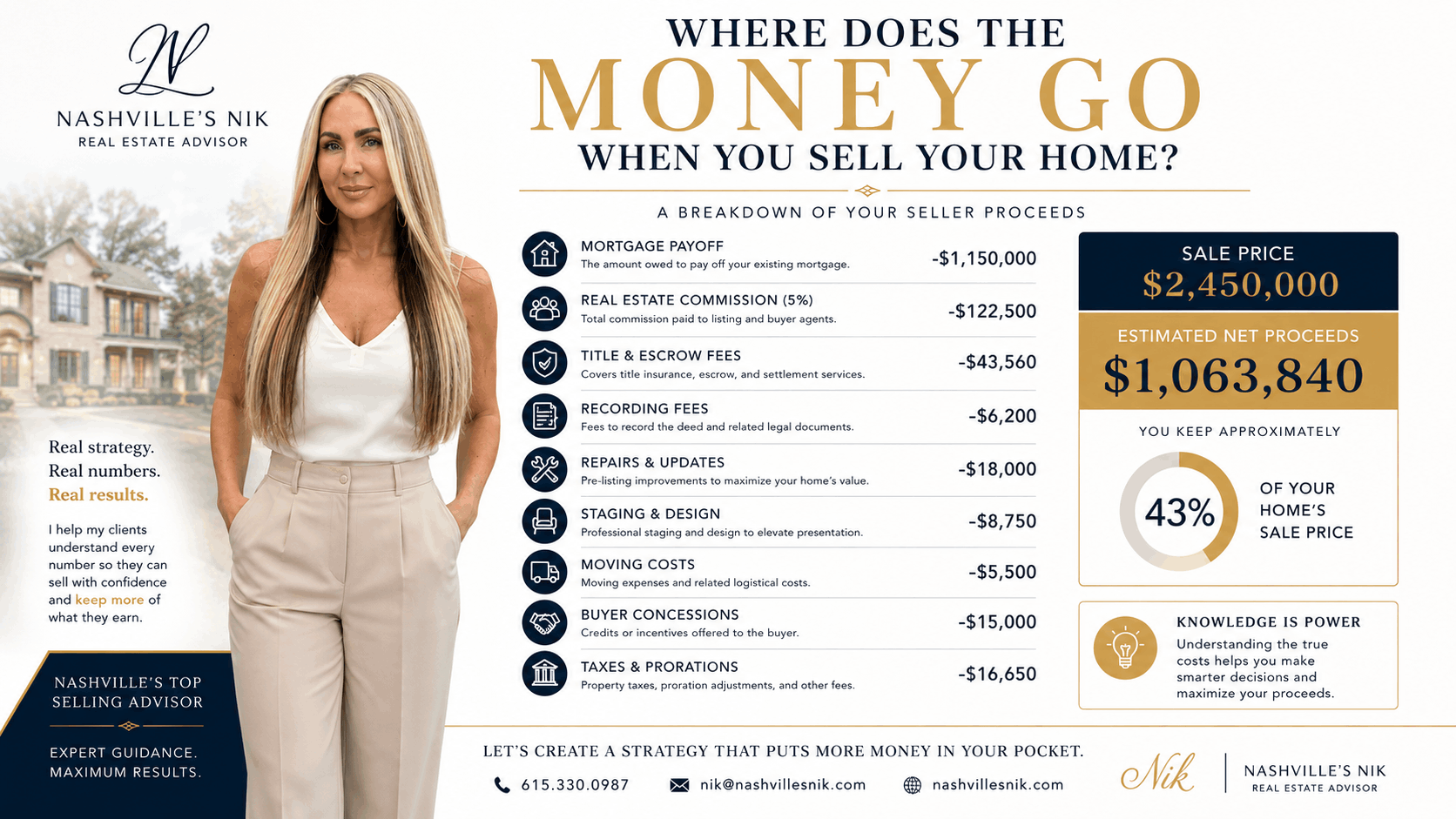
Every homeowner wants to keep as much equity as possible after selling their home. While some costs are unavoidable, many decisions made before and during the selling process can have a meaningful impact on your final proceeds.
The goal isn't simply to sell your home—it's to maximize what you walk away with at closing.
Here are several strategies that can help.
Price Your Home Correctly From Day One
One of the most expensive mistakes homeowners make is pricing too high.
Many sellers believe they can "leave room to negotiate," but today's buyers are well-informed. They compare dozens of homes online before scheduling a showing. If your home is priced above market value, many buyers won't even consider it.
A well-priced home often generates:
- More online views
- More showings
- Greater buyer interest
- Stronger offers
- Faster sales
- Better negotiating leverage
Pricing correctly from the beginning frequently produces a stronger financial outcome than reducing the price after several weeks on the market.
Invest in the Right Improvements
Not every renovation produces a positive return.
Instead of spending tens of thousands of dollars remodeling kitchens or bathrooms, many homeowners benefit more from strategic improvements such as:
- Fresh interior paint
- Professional landscaping
- Pressure washing
- Updated lighting
- Decluttering
- Deep cleaning
- Minor repairs
- Modern hardware
- Neutral décor
Small improvements often create a much stronger first impression than large, expensive remodels.
Work With an Experienced REALTOR®
A successful sale involves much more than placing a sign in the yard.
An experienced REALTOR® helps you:
- Develop an accurate pricing strategy
- Prepare your home for the market
- Coordinate professional photography
- Build a comprehensive marketing plan
- Negotiate offers
- Navigate inspections
- Manage deadlines
- Coordinate closing
The right guidance can help you avoid costly mistakes while positioning your home to attract qualified buyers.
Be Flexible During Negotiations
Every real estate transaction involves negotiation.
Rather than focusing on a single number, evaluate the complete offer, including:
- Purchase price
- Financing
- Earnest money
- Inspection requests
- Closing timeline
- Seller concessions
- Possession dates
Sometimes accepting a slightly lower offer with fewer contingencies results in a smoother transaction and a higher net profit than accepting the highest purchase price with significant risks.
Plan Early
The homeowners who experience the least stress are usually those who begin preparing months before listing.
Starting early allows time to:
- Complete repairs
- Declutter
- Stage the home
- Improve curb appeal
- Organize moving plans
- Review financial goals
- Understand estimated net proceeds
Planning ahead often eliminates last-minute decisions and creates a smoother selling experience.
Common Mistakes That Reduce Seller Profit
Many homeowners unintentionally reduce their own proceeds by making avoidable decisions.
Some of the most common include:
Waiting Too Long to Prepare
Last-minute preparation often results in rushed decisions and unnecessary expenses.
Ignoring Small Repairs
Minor maintenance issues can create larger buyer concerns during inspections.
Choosing Price Over Terms
The highest offer isn't always the strongest offer.
Depending Only on Online Estimates
Automated valuation tools cannot fully account for your home's condition, updates, location, or current buyer demand.
Skipping Professional Marketing
Poor photography, limited marketing, or inadequate online exposure can reduce buyer interest and ultimately affect your final sales price.
Final Thoughts
Selling your home is more than a transaction—it's a significant financial decision that deserves thoughtful planning.
Understanding the true costs associated with selling helps eliminate surprises and allows you to make informed decisions throughout the process.
While every transaction includes expenses, many of those costs are investments that help position your home for greater success.
Professional preparation, accurate pricing, comprehensive marketing, and skilled negotiation all work together to maximize your final proceeds.
Whether you're selling a luxury home in Brentwood, a historic property in Franklin, a waterfront home on Old Hickory Lake, or a family home anywhere in Middle Tennessee, having a clear financial strategy before listing can make the entire process more predictable and less stressful.
If you're considering selling in the next few months—or even next year—I'd be happy to prepare a personalized seller net sheet so you know exactly what to expect before your home goes on the market.
Key Takeaways
- Your sale price is not the same as your net proceeds.
- Mortgage payoff is usually the largest deduction at closing.
- Preparation and professional marketing often increase your final profit.
- Every seller's costs are unique, which is why a personalized seller net sheet is valuable.
- Strategic pricing and skilled negotiation can help maximize your bottom line.
- Planning ahead gives homeowners more options and fewer surprises.
Related Seller Resources
✓ How Much Is My Nashville Home Worth?
✓ Best Realtor in Nashville: How to Choose the Right Listing Agent
✓ Thinking About Selling Your Nashville Home? Here's Why Hundreds of Homeowners Choose Nashville's Nik
✓ 27 Things Every Nashville Homeowner Should Do Before Listing Their Home
✓ Pre-Listing Repairs That Add Value
✓ The Ultimate Home Selling Timeline
✓ 11 Costly Mistakes Nashville Homeowners Make When Selling Their Home
✓ Should You Sell Before Buying Your Next Home?
✓ Downsizing Your Home in Nashville
Contact Nashville's Nik
Thinking about selling your home in Middle Tennessee?
I'd be happy to prepare a complimentary Seller Net Proceeds Estimate so you know what you may walk away with before your home ever hits the market.
With more than 18 years of experience, 510+ homes sold, and approximately $200 million in career sales, I've helped hundreds of homeowners maximize their equity through strategic pricing, professional marketing, and skilled negotiation.
Complimentary Seller Services
- Personalized Seller Net Sheet
- Comparative Market Analysis (CMA)
- Home Value Consultation
- Pricing Strategy
- Home Preparation Recommendations
- Professional Marketing Plan
- Selling Timeline Consultation
Areas Served
Nashville • Brentwood • Franklin • Hendersonville • Gallatin • Mount Juliet • Lebanon • Belle Meade • Green Hills • Forest Hills • Oak Hill • College Grove • Nolensville • Spring Hill • Thompson's Station • White House • Old Hickory Lake • Middle Tennessee
Contact Information
Nashville's Nik (Nik Shewmaker)
REALTOR® | Real Broker
📞 (615) 585-0022
If you're planning to sell within the next 3–12 months, contact me for a complimentary home value consultation and personalized seller net proceeds estimate.
Frequently Asked Questions
1. How much does it cost to sell a home in Nashville?
The cost of selling a home varies depending on factors such as your mortgage payoff, REALTOR® compensation, title and closing costs, repairs, concessions, and any preparation expenses. Every transaction is unique, so a personalized seller net sheet provides the most accurate estimate.
2. What is a seller net sheet?
A seller net sheet is an estimate that outlines how much money you may receive after your home sells. It accounts for the anticipated sales price, mortgage payoff, closing costs, concessions, and other expenses to estimate your net proceeds.
3. What is the biggest expense when selling a home?
For most homeowners, the largest expense is paying off the remaining mortgage balance. Other costs vary depending on the property, negotiations, and the services used to prepare and market the home.
4. Do sellers pay closing costs in Tennessee?
In many transactions, sellers are responsible for certain closing-related expenses. The exact costs depend on the terms negotiated in the purchase agreement and the details of the transaction.
5. What are seller concessions?
Seller concessions are costs the seller agrees to pay on behalf of the buyer, such as closing costs, repair credits, or interest rate buydowns. They are negotiated as part of the purchase contract and vary from one transaction to another.
6. Should I make repairs before selling my home?
Addressing visible maintenance issues before listing often helps create a stronger first impression and can reduce repair requests during the inspection period. Strategic repairs may also improve buyer confidence.
7. Is professional staging worth the investment?
In many cases, yes. Professional staging helps buyers visualize the home, improves listing photography, and can increase buyer interest by making the property feel more inviting and functional.
8. Do professional photography and video really help sell a home?
Absolutely. Most buyers begin their search online, and high-quality photography, drone images, video tours, and floor plans can increase visibility, generate more showings, and attract stronger buyer interest.
9. Will I owe capital gains taxes when I sell my home?
That depends on several factors, including how long you've owned the property, whether it has been your primary residence, and your overall tax situation. It's best to consult a qualified CPA or tax advisor for guidance specific to your circumstances.
10. How can I maximize my net proceeds?
Preparing your home properly, pricing it strategically, investing in professional marketing, negotiating effectively, and working with an experienced REALTOR® can all help maximize the amount you receive at closing.
11. Can I estimate my proceeds using an online calculator?
Online calculators provide only general estimates. A personalized seller net sheet prepared by a REALTOR® is typically more accurate because it reflects your mortgage payoff, local closing costs, and the details of your specific property.
12. What costs should I plan for before listing my home?
Many homeowners budget for deep cleaning, landscaping, minor repairs, staging, professional photography, moving expenses, and utility costs. Planning ahead helps avoid last-minute surprises.
13. When should I ask for a seller net proceeds estimate?
Ideally, you should request one before listing your home. Understanding your estimated proceeds early allows you to make informed decisions about pricing, timing, and your next purchase or move.
14. Does choosing the right REALTOR® affect how much money I make?
Yes. An experienced REALTOR® can help develop an effective pricing strategy, coordinate professional marketing, negotiate favorable terms, and identify opportunities to maximize your net proceeds while avoiding costly mistakes.
15. How can Nashville's Nik help me understand the cost of selling my home?
Nashville's Nik provides homeowners with a complimentary Comparative Market Analysis (CMA), a personalized seller net proceeds estimate, guidance on preparation and pricing, and a comprehensive marketing strategy designed to help maximize your return and simplify the selling process.
Categories
- All Blogs (347)
- -Brentwood--TN-vs--Franklin--TN---Which-Is-Better-for-You--Nashville-s-Nik-Compares-the-Two (1)
- -Is-Brentwood--TN-a-Good-Place-to-Invest-in-Real-Estate--Nashville-s-Nik-Shares-Market-Insights (1)
- -Is-Brentwood--TN-a-Suburb-of-Nashville--Nashville-s-Nik-Explains-the-Connection (1)
- -Is-Brentwood--TN-Safe--What-You-Should-Know-Before-Moving---with-Nashville-s-Nik (1)
- -Moving-to-Brentwood--TN--Nashville-s-Nik-s-Complete-Relocation-Guide-for-2025 (1)
- -Top-5-Nashville-Suburbs-for-Out-of-State-Buyers (1)
- -What-Are-the-Best-Neighborhoods-in-Brentwood--TN--Nashville-s-Nik-Shares-Local-Favorites (1)
- -What-Jobs-Are-in-Brentwood--TN--Nashville-s-Nik-Breaks-Down-the-Local-Economy (1)
- 10-Mistakes-to-Avoid-When-Buying-a-Home-in-Nashville (1)
- A Local’s Guide to the Best Coffee Shops in Middle Tennessee (1)
- Arrington TN Real Estate (1)
- Best-Nashville-Neighborhoods-for-First-Time-Buyers-in-2025 (1)
- Best-Realtor-in-Nashville---Franklin--What-to-Ask-Before-Hiring-a-Middle-Tennessee-Real-Estate-Agent (1)
- Brentwood (1)
- Brentwood Guide (3)
- Brentwood TN Real Estate (1)
- Can I Sell My Home While in Forbearance in Nashville? (1)
- Can-I-Buy-My-First-Home-in-Nashville-With-Zero-Down- (1)
- College Grove TN Real Estate (1)
- Do-I-Really-Need-a-Buyer-s-Agent-When-Purchasing-in-Nashville- (1)
- First-Time Buyers (1)
- franklin (1)
- Franklin TN Real Estate (1)
- Gallatin Guide (1)
- Gallatin TN Real Estate (1)
- Hendersonville (1)
- Hendersonville Real Estate (2)
- Here are five top events happening in Nashville, Tennessee, in June 2025 (1)
- Home Buying Tips (3)
- Home Preparation (1)
- Home Selling Tips (8)
- Home Values (2)
- How Do I Handle a Low Appraisal When Selling My Home in Nashville? (1)
- How Do I Know If I’m Ready to Sell My Home in Nashville? (1)
- How Do I Sell My Home Quickly in Nashville, TN? (1)
- How Does Nashville’s Healthcare System Compare for Newcomers? (1)
- How Is the Real Estate Market in Brentwood, TN? Nashville’s Nik Gives the 2025 Update (1)
- How Much Do I Really Need for a Down Payment on a Nashville Home? (1)
- How Much Does It Cost to Sell a Home in Brentwood, TN (1)
- How to Improve Your Credit Score Before Buying a Home in Nashville (1)
- How to Maximize Your Profit When You Sell Your Home in Nashville, TN (1)
- How to Sell a Home in a Changing Nashville Real Estate Market (1)
- How to Sell a Home That Needs Repairs in Nashville, TN (1)
- How to Sell a Home With Solar Panels in Nashville (1)
- How to Sell Your Home As-Is in Mount Juliet, TN (1)
- How to Sell Your Home by Owner in Brentwood, TN (1)
- How to Sell Your Home Fast in Hendersonville, TN (1)
- How to Sell Your Home in Arlington, TN (1)
- How to Sell Your Home in Forest Hills, TN: A Smart Seller’s Guide (1)
- How to Sell Your Home in Nashville After a Divorce (1)
- How to Sell Your Home in Nolensville, TN: A Complete Guide (1)
- How to Sell Your Home in Oak Hill, TN: A Step-by-Step Guide (1)
- How to Sell Your Home in Spring Hill, TN: A Complete Guide (1)
- How to Stage a Home for Sale in Nashville, TN (1)
- How-Are-the-Schools-in-Brentwood--TN--Nik-s-Expert-Overview (1)
- How-Do-I-Buy-a-Home-in-Nashville--TN (1)
- How-Do-Nashville-s-Grocery-and-Shopping-Options-Compare-for-Newcomers- (1)
- How-Do-Nashville-s-Job-Opportunities-Compare-for-Relocators- (1)
- How-Do-Nashville-s-Neighborhoods-Differ-for-New-Residents- (1)
- How-Do-Nashville-s-Parks-and-Outdoor-Spaces-Compare-for-Families- (1)
- How-Do-Nashville-s-Taxes-Compare-for-New-Residents- (1)
- How-Do-Nashville-s-Utilities-and-Internet-Compare-for-New-Residents- (1)
- How-Does-Nashville-s-Food-Scene-Compare-for-New-Residents- (1)
- How-Does-Nashville-s-Housing-Market-Compare-for-Relocators- (1)
- How-Does-Nashville-s-Public-Transit-Compare-for-Newcomers- (1)
- How-Does-Nashville-s-School-System-Compare-for-Relocating-Families- (1)
- How-Far-Is-Brentwood--TN-from-Franklin--Nashville-s-Nik-Explains-the-Local-Connection (1)
- How-Far-Is-Brentwood--TN-from-Nashville--Nashville-s-Nik-Explains-the-Commute--Traffic--and-Access (1)
- How-Interest-Rate-Changes-Could-Impact-Your-Nashville-Home-Purchase (1)
- How-Is-Nashville-s-Commute-and-Public-Transportation-for-Newcomers- (1)
- How-Long-Does-It-Take-to-Buy-a-Home-in-Nashville--TN- (1)
- How-Much-Does-It-Really-Cost-to-Relocate-to-Nashville- (1)
- How-Much-House-Can-I-Afford-in-Nashville- (1)
- How-Nashville-s-Growth-Is-Affecting-First-Time-Home-Buyers (1)
- How-to-Avoid-Buyer-s-Remorse-When-Purchasing-a-Home-in-Nashville (1)
- How-to-Avoid-Overpaying-for-a-Home-in-Nashville-s-Popular-Areas (1)
- How-to-Buy-a-Condo-in-Nashville---What-You-Need-to-Know (1)
- How-to-Buy-a-Fixer-Upper-in-Nashville-Without-Breaking-the-Bank (1)
- How-to-Buy-a-Home-in-Nashville-on-a-Tight-Budget---Real-Strategies-That-Work (1)
- How-to-Buy-a-Home-in-Nashville-When-You-re-Relocating-From-Another-State (1)
- How-to-Buy-a-Home-in-Nashville-with-Bad-Credit (1)
- How-to-Buy-a-Home-in-Nashville-Without-Regretting-It-Later (1)
- How-to-Buy-a-Home-in-Nashville-Without-Selling-Your-Current-House-First (1)
- How-to-Buy-Your-First-Home-in-East-Nashville-Without-Getting-Overwhelmed (1)
- How-to-Choose-the-Best-Realtor-in-Brentwood--Tennessee (1)
- How-to-Choose-the-Best-Realtor-in-Franklin--Tennessee (1)
- How-to-Choose-the-Best-Realtor-in-Hendersonville--Tennessee (1)
- How-to-Choose-the-Right-Nashville-Suburb-for-Your-Lifestyle (1)
- How-to-Find-the-Best-Deals-on-Homes-in-Nashville-Right-Now (1)
- How-to-Get-Pre-Approved-for-a-Home-Loan-in-Nashville (1)
- How-to-Negotiate-Repairs-After-a-Home-Inspection-in-Nashville (1)
- How-to-Spot-a-Great-Deal-in-the-Nashville-Housing-Market (1)
- How-to-Win-a-Multiple-Offer-Situation-When-Buying-in-Nashville (1)
- How-to-Work-With-a-Nashville-REALTOR-to-Find-Your-Perfect-Home (1)
- Investing (1)
- Investment Properties (1)
- Is-Brentwood--TN-a-Good-Place-to-Raise-a-Family--Nashville-s-Nik-Shares-Why-Parents-Love-It-Here (1)
- Is-Brentwood--TN-a-Good-Place-to-Retire--Nashville-s-Nik-Shares-Why-It-s-Ideal-for-Active-Adults (1)
- Is-Brentwood--TN-Expensive--Nashville-s-Nik-Breaks-Down-the-Real-Costs-of-Living-Well (1)
- Is-It-Smarter-to-Buy-a-Home-in-Nashville-Before-Interest-Rates-Drop-Again- (1)
- Is-Nashville-a-Good-Place-to-Retire- (1)
- Is-Now-a-Good-Time-to-Buy-a-Home-in-Nashville-With-Today-s-Interest-Rates- (1)
- Is-Relocating-to-Nashville-a-Good-Idea-in-2025- (1)
- Lakefront Living (2)
- Lebanon TN Real Estate (1)
- Listing Agent (1)
- Luxury Homes (3)
- Luxury Real Estate (1)
- Market Updates (1)
- Middle Tennessee Real Estate (1)
- Mount Juliet Guide (4)
- Mount Juliet TN Real Estate (1)
- Moving-from-New-York-to-Tennessee--Here-s-What-You-Should-Know--From-a-Nashville-Relocation-Specialist- (1)
- Murfreesboro Guide (1)
- Murfreesboro TN Real Estate (1)
- Nashville (1)
- Nashville Guide (3)
- Nashville Neighborhoods (1)
- Nashville Real Estate (6)
- Nashville Real Estate Market (2)
- Nashville TN Real Estate (1)
- Nashville’s Musical Roots: Museums, Hidden Gems, and a DIY Walking Tour (1)
- Neighborhood Guides (1)
- New Construction (2)
- Nolensville TN Real Estate (1)
- Pet-Friendly Spots in Middle Tennessee: Parks, Patios, and More (1)
- Real Estate Advice (1)
- Real Estate Tips (1)
- Relocation Guide (1)
- Relocation to Nashville (1)
- Seasonal Home Maintenance Tips for Middle Tennessee Homeowners (1)
- Seller Resources (12)
- Selling Your Home (1)
- Should I Sell My Home Now or Wait in Nashville, TN? (1)
- Should I Sell My Home or Rent It Out in Nashville, TN? (1)
- Should-I-Rent-or-Buy-a-Home-in-Nashville-Right-Now----Expert-Advice-From-Nik-Shewmaker-REALTOR (1)
- Should-I-Use-a-Local-Nashville-Lender-or-a-Big-Bank-to-Buy-My-Home- (1)
- Spring Hill TN Real Estate (1)
- The Titans of Nashville: Exploring the Largest Companies Shaping Music City (1)
- The-Ultimate-Nashville-Home-Buyer-s-Checklist-for-2025 (1)
- Things I Love About Providence Marketplace in Mount Juliet (1)
- Thompson’s Station TN Real (1)
- Top 3 State Parks in Middle Ten (1)
- Top 5 Can’t-Miss Family-Friendly Festivals in Nashville, Tennessee – June 2025 (1)
- Top Lakes in Middle Tennessee for Boating, Fishing, and Swimming Nik S (1)
- Top Things to Do in Mount Juliet, Tennessee: A Local’s Guide to Fun and Adventure (1)
- Top Upscale Restaurants in Brentwood, Tennessee (1)
- What Are the Pros and Cons of Selling a Home Without a Realtor in Nashville, TN? (1)
- What Happens After You Accept an Offer on Your Home in Nashville, TN? (1)
- What Happens After You Sell Your Home in Nashville, TN? (1)
- What Is the First Step in Selling Your Home in Nashville, TN? (1)
- What Paperwork Do I Need to Sell My Home in Nashville? (1)
- What to Do Before You Sell Your Home in Nashville, TN (1)
- What to Expect When You Sell Your Home in Nashville, TN (1)
- What-Are-Closing-Costs-When-Buying-a-Home-in-Nashville--TN- (1)
- What-Are-the-Best-First-Time-Buyer-Loan-Programs-in-Tennessee- (1)
- What-Are-the-Safest-Neighborhoods-in-Nashville-for-New-Residents- (1)
- What-Credit-Score-Do-You-Need-to-Buy-a-Home-in-Nashville--TN- (1)
- What-I-Wish-I-Knew-Before-Buying-My-First-Home-in-Nashville (1)
- What-Is-the-Average-Home-Price-in-Brentwood--TN--Nashville-s-Nik-Breaks-Down-the-Market (1)
- What-Is-the-Average-Mortgage-Payment-for-a-Home-in-Nashville-in-2025- (1)
- What-Is-the-Easiest-Way-to-Buy-a-House-in-Nashville-in-Today-s-Market- (1)
- What-Jobs-Are-Bringing-People-to-Nashville- (1)
- What-s-It-Like-Living-in-Brentwood--TN--Nashville-s-Nik-Shares-a-Local-s-Honest-Take (1)
- What-s-the-Best-Time-of-Year-to-Relocate-to-Nashville- (1)
- What-s-the-Weather-Like-in-Brentwood--TN--Nashville-s-Nik-Shares-What-to-Expect-Year-Round (1)
- What-Should-I-Know-About-Nashville-s-Weather-Before-Relocating- (1)
- What-to-Know-About-Homeowners-Insurance-When-Buying-in-Nashville (1)
- When to Sell Your Home in Franklin, TN (1)
- Why Are Homes in Nashville Not Selling Like They Used To? (1)
- Why-Are-So-Many-People-Moving-to-Brentwood--TN--Nashville-s-Nik-Explains-the-Surge (1)
- Why-So-Many-New-Yorkers-Are-Moving-to-Tennessee (1)
- Why-Waiting-to-Buy-a-Home-in-Nashville-Could-Cost-You-More (1)
- Why-Working-With-a-Local-Expert-Like-Nik-Shewmaker-REALTOR-Can-Save-You-Thousands (1)
- Why-You-Shouldn-t-Skip-the-Home-Inspection-When-Buying-in-Nashville (1)
Recent Posts