Buy Near the New Midtown Innovation Neighborhood?
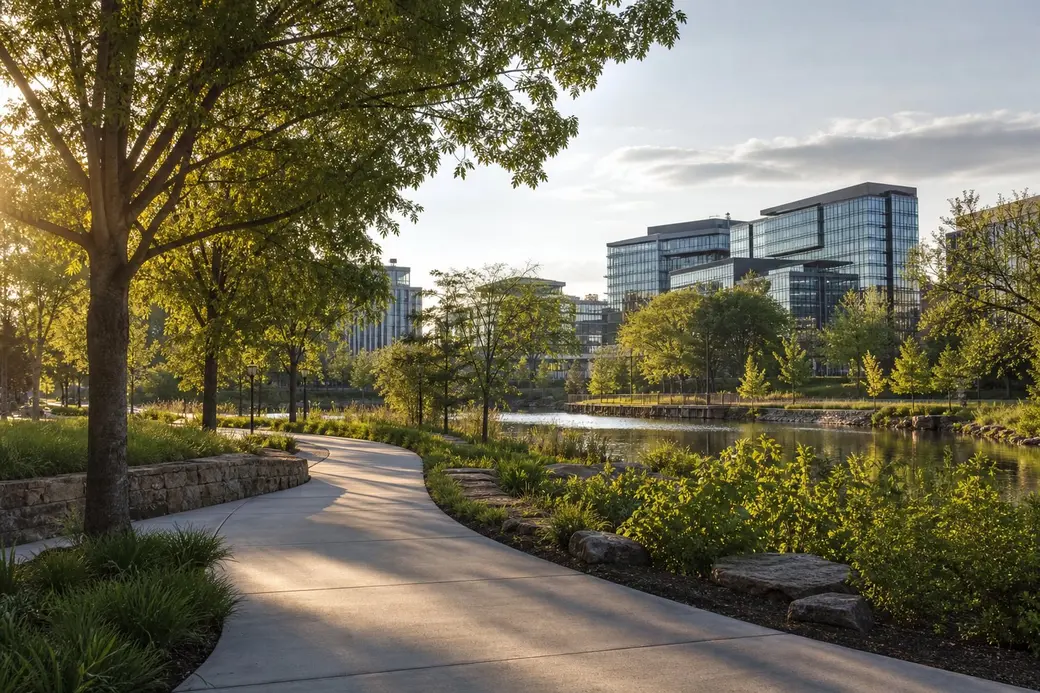
Buying near Vanderbilt's approved 43-acre project can make sense, but the answer changes block by block. Construction may stretch up to 30 years, tall buildings are planned near West End and Natchez Trace, and rezoning alone doesn't guarantee higher values. Verify views, access, and phasing before you offer.
Buy Near the New Midtown Innovation Neighborhood?
Should you buy a home near Vanderbilt's redevelopment of its surface parking?
It can be a smart move, but only if you evaluate the specific property rather than the "near Vanderbilt" label. The New Midtown Innovation Neighborhood covers approximately 43 acres of mostly surface parking and could build out over up to 30 years, so you may live through demolition, construction, and a finished neighborhood in the same ownership period. Rezoning approval alone doesn't prove nearby prices will rise.
Key Takeaways
- The approved project covers approximately 43 acres in Midtown and up to roughly 6.1 million square feet of housing, retail, research, and lab space.
- The tallest permitted buildings, up to 30 stories or about 425 feet, are concentrated near West End Avenue and Natchez Trace.
- Build-out could take up to 30 years, so approved capacity is not a guaranteed schedule or a promise that every permitted square foot gets built.
- Planned public improvements include about 1.7 miles of new sidewalks and 1.3 miles of new bikeways, but their timing depends on construction sequencing.
- September 2026 regional reporting points to more inventory and longer marketing periods than the tightest recent conditions, which can give buyers more time to do their homework.
Here's how I'd think about this decision if you were sitting across from me. Start with what's actually approved, then separate the near-term disruption from the long-term upside, then look hard at your own block.
How will the New Midtown Innovation Neighborhood affect nearby home values?
It depends on where the property sits, and no one can promise a price effect. Value will likely vary by distance, building orientation, parking, noise exposure, construction timing, and access to finished amenities.
The project is in Midtown at the edge of Vanderbilt's campus, close to West End Avenue, 30th Avenue South, 31st Avenue South, Natchez Trace, and Vanderbilt Place, according to the Groundbreak project record. A home facing a future construction zone is a different purchase than one a few blocks away that gains a new sidewalk, a restaurant, or a public square within walking distance.
What could help values over the long run?
The publicly described amenities are meaningful. They include roughly 1.7 miles of new sidewalks, 1.3 miles of new bikeways, a pedestrian "Meander," publicly accessible green space, a public square, native plantings, arts and cultural areas, restaurants, and retail, per Groundbreak.
Completed public-realm improvements, new employment, and pedestrian connections could broaden the buyer pool for properties that stay quiet and easy to reach. That's the upside case.
What could hold values back?
Active construction can weigh on the appeal of immediately adjacent properties. Think noise, dust, truck traffic, temporary access changes, and altered views.
The biggest question mark is a view. If your open sightline depends on Vanderbilt-owned land, that land is now approved for redevelopment, and the tallest buildings are planned near West End and Natchez Trace.
Does rezoning approval mean prices will rise?
No. Approval creates permission, not a build date. A long build-out means a buyer may see several different market conditions before the New Midtown Innovation Neighborhood reaches its intended final form.
The September 2026 Nashville Post market reporting describes the broader region as having more inventory and longer marketing periods than the tightest recent conditions. That's a regional observation. It tells you buyers may have a little more room to negotiate and inspect, but it says nothing about the value or resale speed of any single Midtown property.
| Factor | What the public plan describes | What to verify for your property |
|---|---|---|
| Footprint | About 43 acres, largely surface parking today | Which Vanderbilt parcels border or face the home |
| Height | Up to 30 stories (about 425 feet) near West End and Natchez Trace | Sightlines and shadow exposure from your lot |
| Timeline | Possible build-out over up to 30 years | Which phases are likely first and where construction access will run |
| Public amenities | Sidewalks, bikeways, Meander, green space, public square | Whether your block is near an early or late improvement |
| Uses | Housing, retail, research, and lab space | Planned building locations next to you |
What will construction, traffic, and parking look like near Vanderbilt?
Expect more activity during construction and more activity once it's built, and plan around both. The plan adds housing, offices, laboratories, retail, and restaurants, so vehicle, delivery, rideshare, service, and pedestrian trips may all increase.
I can't give you a verified traffic-volume forecast, and neither can anyone who is quoting a number without a source. What I can tell you is what to test for yourself.
Near-term disruption
The early years of a project like this tend to involve demolition, utility work, road changes, and construction traffic. If a home depends on one street for driveway access, ask which routes crews and trucks are likely to use.
Long-term mobility
New sidewalks, bikeways, and a pedestrian route may make daily errands easier on foot or by bike. Those benefits are described in the plan, but each transportation improvement doesn't have a guaranteed completion date.
What happens to the surface parking?
Because the site is largely surface parking, redevelopment changes both the streetscape and the land-use pattern. If you park on the street or near campus today, ask how parking is being handled in each phase before you assume your routine stays the same.
If you're also weighing higher-end properties in the area, my post on what buyers should know about Nashville luxury homes covers how to weigh surroundings against the home itself.
What should you check before buying or selling near the project?
Check the plan documents, the parcels that border your property, and the likely construction sequence before you commit. A general "near Vanderbilt" label tells you almost nothing.
A buyer's checklist
- Review the approved specific-plan materials through the Metro Nashville Planning Department, along with any later site-specific development applications.
- Identify which Vanderbilt parcels border or face the property and what is planned there.
- Ask about construction access and phasing. Where will crews enter, and which phases come first?
- Visit at peak traffic times, weekday mornings and evenings, not just on a quiet Saturday showing.
- Test whether views, parking, driveway access, or quiet conditions could change.
If you already own nearby
Sellers close to the site face a timing decision. A home several blocks away that keeps its quiet and gains access to new amenities may be in a strong position later. A home directly across from a planned construction zone may be harder to present during active phases.
Neither outcome is automatic. The right move depends on your block, your timeline, and what buyers are paying for comparable homes right now. That's exactly the kind of question I walk clients through with a real comparative market analysis before we decide whether to list now or wait.
Is buying next to a large construction project ever a good idea?
Yes, for the right buyer at the right price. If you can live with years of activity, the home has access that won't be disrupted, and the price reflects the risk, it can work. If you need quiet and a protected view, it's usually a harder fit.
If you'd like to compare Midtown with other parts of Middle Tennessee, I can also walk you through Green Hills, West Meade, Brentwood, and Franklin, so you see the tradeoffs side by side.
Want to see how your own address stacks up? You can read what past clients say on my Google, Zillow, and Realtor.com profiles.
FAQ
When will construction start on Vanderbilt's Innovation Neighborhood, and how long will it take?
The project may build out over up to 30 years, and approval doesn't set a single start date for everything. Work is expected to come in phases, so ask about the sequence for the parcels nearest the home you're considering. Confirm timing against current site-specific applications, since schedules can change.
Will the Innovation Neighborhood increase traffic on West End Avenue?
It may, during construction and after opening. The plan adds housing, offices, labs, retail, and restaurants, which can increase vehicle, delivery, rideshare, and pedestrian activity. There isn't a verified traffic-volume forecast I can point you to, so visit the area at peak times before you decide.
Will homes near Vanderbilt become more valuable after the project is built?
Possibly, but it isn't guaranteed. Rezoning approval alone doesn't prove prices will rise. Effects will likely differ by distance, orientation, noise, parking, access, and timing, so a property-specific analysis matters more than any general prediction.
Which neighborhoods will be most affected?
The properties closest to West End Avenue, 30th Avenue South, 31st Avenue South, Natchez Trace, and Vanderbilt Place will feel it most. Homes farther west, south, or north may see different levels of construction exposure, traffic, and amenity access. Impact varies by block, which is why I look at each address individually.
Will the project add apartments, condos, or single-family housing?
The approved plan includes housing alongside retail, research, and lab space. The exact mix and locations are set through the plan materials and later development applications, so review those documents or ask me to help you read them before you assume a building type next door.
Ready to evaluate a specific address near Vanderbilt?
The New Midtown Innovation Neighborhood is a long project with a real upside and real near-term tradeoffs. The right call depends on your block, your timeline, and your tolerance for construction. I'll help you look at your property or your target address with clear eyes, no pressure.
Schedule a Nashville Real Estate Consultation or Search Nashville & Middle Tennessee Homes for Sale.
Equal Housing Opportunity. Nik Shewmaker, Tennessee Real Estate License. Regulated by the Tennessee Real Estate Commission (TREC) | Real Broker, LLC. This article is general information, not legal, tax, or financial advice. Confirm your own numbers and details with your title company, tax advisor, or lender.
Categories
- All Blogs (649)
- About Nik (9)
- Brentwood Guide (51)
- Buyer Resources (43)
- Clarksville & Montgomery County Guide (28)
- Corporate Relocation (5)
- Events & Things to Do (8)
- Franklin & Williamson County Guide (52)
- Hendersonville & Gallatin Guide (84)
- Luxury & Lake Living (9)
- Market Updates (4)
- Mt. Juliet & Lebanon Guide (91)
- Murfreesboro & Smyrna Guide (46)
- Nashville Neighborhoods (56)
- Nashville Real Estate (21)
- Relocation Guide (2)
- Relocation Guides (51)
- Seller Resources (65)
Recent Posts