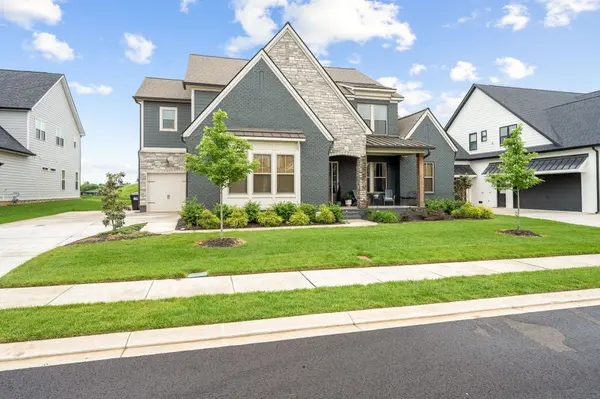
What Buyers Should Know About Nashville Luxury Homes
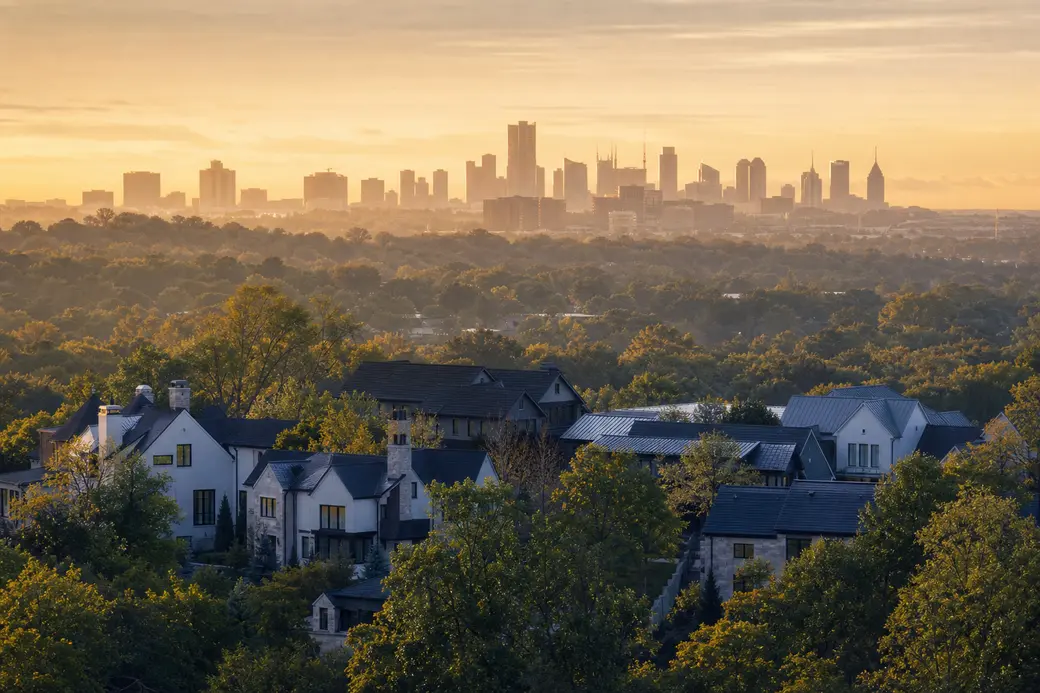
Buying luxury homes in Nashville requires a different approach than a standard purchase, fewer comparable sales, longer due-diligence timelines, and neighborhood-specific trade-offs across Belle Meade, Brentwood, Franklin, and beyond. Working with an agent who knows the luxury segment is the single most important decision you'll make.
What does buying luxury homes in Nashville actually involve?
Buying luxury homes in Nashville is a fundamentally different process from a conventional purchase. The comps are thinner, the due-diligence list is longer, and the trade-offs between neighborhoods, Belle Meade versus Brentwood, a historic estate versus new construction in Franklin, require local knowledge that no algorithm can replicate. If you're serious about buying at the top of this market, here's what you need to understand before you write an offer.
Key Takeaways
- According to Greater Nashville REALTORS®, there were 112 sales at $4 million or more across the region in 2025, with most concentrated in Williamson County, a thin pool that makes every individual transaction highly specific.
- Most luxury buyers and agents treat $1.5 million as the practical entry point for the Nashville luxury segment in 2026, though the threshold shifts by submarket and property type.
- Luxury properties have fewer directly comparable sales, so a broad regional median price is not a substitute for a submarket-specific comparative market analysis.
- Due diligence on a high-end Middle Tennessee property can cover pools, elevators, generators, geothermal HVAC, retaining walls, private roads, and smart-home infrastructure, plan your inspection timeline accordingly.
- According to The Tennessean, closings across the broader nine-county Nashville area fell 4% year over year in August 2026, a broader market signal worth tracking as you time your purchase.
What price range qualifies as a luxury home in Nashville in 2026?
Most serious buyers and agents treat roughly $1.5 million as the practical entry point for Nashville's luxury segment, though that threshold shifts depending on the submarket and property type. A $1.5 million budget in Franklin buys something very different from the same number in Belle Meade or a downtown high-rise.
At the true top of the market, Greater Nashville REALTORS® reported 112 sales at $4 million or more across the region in 2025, with most of that activity concentrated in Williamson County. That's a historically thin pool of transactions, which is exactly why pricing strategy matters so much at this level.
Because luxury properties have so few directly comparable sales, a broad regional median tells you almost nothing useful. A credible valuation separates competing properties by neighborhood, lot size, construction quality, age, renovation level, views, and usable living area. If someone hands you a comp sheet that leans on area-wide averages, ask for a better one.
How does the broader 2026 market affect luxury buyers?
According to The Tennessean, closings across the broader nine-county Nashville area fell 4% year over year in August 2026. That's a market-wide signal, not a luxury-specific one, but it does suggest buyers at the high end have more time and more leverage than they did during the peak frenzy years. That said, well-priced luxury properties in the right locations still move, and overpriced ones still sit. Pricing right from day one matters on the sell side, and knowing what a property is truly worth matters just as much on the buy side.
| Submarket | Property Character | Key Due-Diligence Considerations |
|---|---|---|
| Belle Meade | Established estate homes, large lots, limited turnover | Renovation history, lot constraints, architectural restrictions |
| Green Hills | Custom homes, newer infill, high-end condos | Land value, construction quality, HOA rules, traffic exposure |
| Forest Hills / Oak Hill | Estate-style, wooded lots, southern Davidson County | Terrain, drainage, driveway grades, private-road maintenance |
| Brentwood | Larger suburban homes, newer construction, established subdivisions | County jurisdiction, tax treatment, subdivision restrictions, commute |
| Franklin | Historic homes, suburban subdivisions, rural-edge acreage, new luxury builds | Location within Franklin matters sharply, historic vs. new vs. acreage |
| Downtown / Urban Condos | High-rise luxury condominiums | Association budgets, reserve funding, rental rules, building assessments |
| Acreage / Rural-Edge | Williamson, Wilson, Rutherford, Sumner, Maury counties | Wells, septic, shared drives, ag/conservation restrictions, terrain |
How do you approach due diligence differently on a luxury property?
Establish your inspection, financing, appraisal, title, insurance, and document-review deadlines at the time you negotiate the offer, not after you're already under contract and running out of time. On a complex estate, that list gets long fast.
Beyond a standard home inspection, a high-end Middle Tennessee property may require separate reviews of pools and water features, elevators, whole-house generators, geothermal or specialty HVAC systems, retaining walls, detached structures, private roads, security systems, and smart-home infrastructure. Each of those systems can carry significant repair or replacement costs, and a general inspector often isn't the right person to evaluate all of them.
For acreage and rural-edge properties in Williamson, Wilson, Rutherford, Sumner, or Maury counties, add private wells, septic systems, agricultural or conservation restrictions, shared drives, and longer emergency-service distances to that list. These characteristics affect both what you pay to close and what you pay to own the property for years afterward.
I walk my clients through a property-specific due-diligence checklist before we write an offer, because the time to know what you're getting into is before you're under contract, not after. If you want to see what that looks like for a property you're considering, let's talk before you schedule a showing.
What about downtown Nashville luxury condos versus estate properties?
High-end condominiums are a genuinely different asset class, and the comparison with a detached estate isn't just about price per square foot. Before you put a condo's price next to a single-family home's, review the association's budget and reserve funding, the building's insurance coverage, rental and pet rules, parking arrangements, any pending or recent special assessments, and what restrictions exist on renovations. A condo in a building with underfunded reserves is a materially different investment from one in a well-run association, and that difference won't show up in the listing price.
Which Nashville neighborhoods should luxury buyers compare most carefully?
Buying luxury homes in Nashville means choosing between submarkets that look similar on paper but feel very different in practice. Here's how I think about the main ones.
Belle Meade is an established, low-density enclave west of central Nashville with large lots and mature landscaping. Turnover is limited, which means when a property comes available, you need to move with conviction. Buyers should evaluate renovation history carefully, older estate homes can carry deferred maintenance that isn't obvious on a showing, and understand any architectural restrictions before assuming a property can be updated the way you'd want.
Forest Hills and Oak Hill sit in southern Davidson County and offer estate-scale lots relatively close to downtown and Green Hills. The terrain here is real: wooded lots, drainage considerations, driveway grades, and private-road maintenance can all affect what you actually pay to own the property. Don't skip the site-specific due diligence.
Green Hills is a central submarket with strong access to shopping, medical services, and major roads. The inventory mix is wide, older custom homes, newer infill construction, and high-end condominiums all coexist. Comparing price per square foot across those property types without also comparing land value and construction quality will lead you to the wrong conclusion.
Brentwood is in Williamson County, and that county distinction matters more than buyers sometimes realize. Tax treatment, subdivision restrictions, and planned development in the surrounding area are all county-level considerations. Don't evaluate a Brentwood property purely on the city name used in marketing, review the specific parcel.
Franklin covers a lot of ground. A historic home adjacent to downtown Franklin is a completely different purchase from a newer luxury build on the suburban edge or an acreage property outside the central area. Location within Franklin matters sharply, and I'd encourage any buyer to get specific about which part of Franklin they're actually considering. For a broader look at how these areas compare, the Best Places to Live Near Nashville, Tennessee guide is a useful starting point, and the Best Places to Live in Nashville (2026 Guide) adds more neighborhood-level context.
Every situation is different, and the only way to know which submarket fits your goals is to run through the specifics together. That's a conversation worth having before you spend time touring properties in areas that won't serve you well.
If you're relocating and want to understand how Greater Nashville's luxury submarkets compare to what you're used to, the Moving to Nashville from Texas guide covers some of those trade-offs directly.
If you're ready to talk through what buying luxury homes in Nashville looks like for your specific situation, schedule a consultation here or search current Nashville and Middle Tennessee listings to see what's on the market right now.
Clients have shared what working together looks like on Google, Zillow, and Realtor.com, feel free to read through their experiences.
Frequently Asked Questions
What price range is considered a luxury home in Nashville in 2026?
Most agents and buyers treat roughly $1.5 million as the practical entry point for Nashville's luxury segment in 2026, though the threshold varies by submarket. At the top of the market, Greater Nashville REALTORS® recorded 112 sales at $4 million or more across the region in 2025, most of them in Williamson County, a relatively thin pool that makes individual pricing decisions highly specific to each property.
How much negotiating power do buyers have on Nashville luxury properties?
Buyers have more room to negotiate in 2026 than they did during the peak market years, particularly on properties that have been sitting. The Tennessean reported a 4% year-over-year decline in closings across the nine-county area in August 2026, which is a broader signal that the urgency has eased. That said, well-priced luxury properties in the right locations still attract competitive interest, your leverage depends heavily on the specific property, its days on market, and how accurately it's priced.
Should I buy a custom-built home or an established luxury property in Nashville?
The right answer depends on your timeline, renovation tolerance, and what you value most in a property. Established luxury homes in areas like Belle Meade or Forest Hills offer mature lots, established landscaping, and proven locations, but may require significant updating. New or custom construction gives you modern systems and finishes but often means a longer timeline and less established surroundings. Both paths have real trade-offs, and comparing them requires looking beyond price per square foot at construction quality, lot value, and long-term ownership costs.
Are luxury homes in Nashville taking longer to sell?
The broader market has slowed modestly in 2026, and luxury properties, which already have thinner buyer pools than conventional homes, tend to sit longer when they're overpriced or need significant work. Days on market at the luxury level vary considerably by submarket, price point, and property condition. The most reliable way to understand timing for a specific property is a submarket-specific market analysis, not a regional average.
What should I inspect carefully before buying a high-end home in Middle Tennessee?
Beyond a standard home inspection, high-end properties in Middle Tennessee may require separate evaluations of pools, elevators, generators, geothermal or specialty HVAC systems, retaining walls, detached structures, private roads, security systems, and smart-home infrastructure. For acreage or rural-edge properties in Williamson, Wilson, or surrounding counties, add wells, septic systems, and agricultural or conservation restrictions to that list. Plan your due-diligence timeline at the time you negotiate the offer, not after you're already under contract.
The bottom line: buying luxury homes in Nashville rewards preparation and local knowledge in equal measure. The submarkets are distinct, the due-diligence list is long, and the pricing requires real analysis, not a regional average. That's exactly the kind of guidance I provide every client I work with. Schedule a consultation and let's talk through what the right property looks like for you.
Equal Housing Opportunity. Nik Shewmaker, License #308990. Tennessee Real Estate Commission (TREC) | Real Broker, LLC. This article is general information only and is not legal, tax, or financial advice. Confirm your specific numbers and circumstances with your closing agent, tax advisor, or lender.
Categories
- All Blogs (369)
- About Nik (8)
- Brentwood Guide (51)
- Buyer Resources (43)
- Events & Things to Do (8)
- Franklin & Williamson County Guide (36)
- Hendersonville & Gallatin Guide (25)
- Luxury & Lake Living (9)
- Market Updates (2)
- Mt. Juliet & Lebanon Guide (25)
- Murfreesboro & Smyrna Guide (11)
- Nashville Neighborhoods (25)
- Nashville Real Estate (21)
- Relocation Guides (51)
- Seller Resources (52)
Recent Posts